Why Good Architecture Still Fails in Production
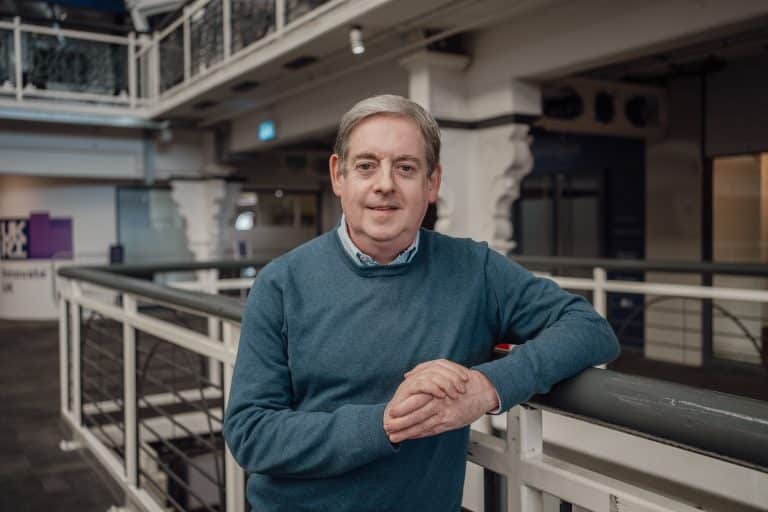
At Devoxx UK in London, I caught up with Eoin Woods - co-author of three software architecture books and former CTO of Endava, to find out why beautifully designed systems still break in production.
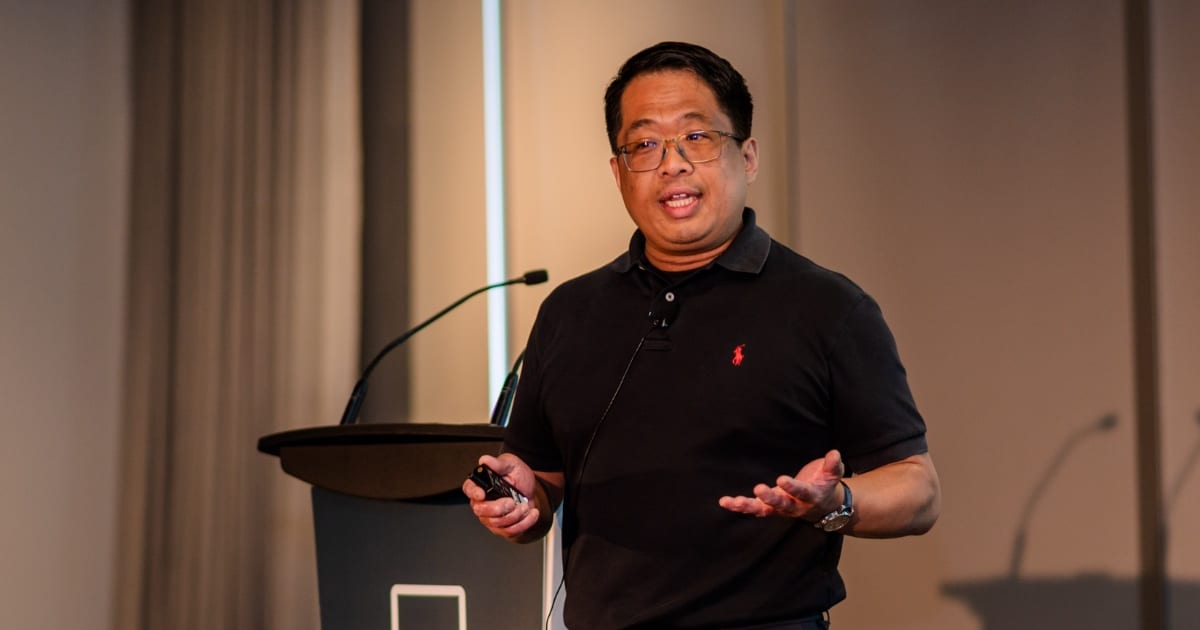
David Fung, ICF PCC, founder and executive coach at Coachful Coaching, spent over two decades in tech, most recently as a Senior Director at Salesforce leading Sales Engineering teams.
I had a chance to talk to him at CTO Craft Con in Toronto about the most reliable signal that something is wrong in the teams. Coincidentally, it is also the one most leaders misread.
One of the biggest signs that you may not be clear is if you hear silence. A lot of leaders take silence as alignment. But silence is actually a sign that maybe people are either not clear or they may have just given up fighting with you.
The pattern he described is familiar to anyone who has worked under a fast-moving founder or senior leader: repeated pivots train teams to stop pushing back. The resistance has proven futile in the past. And the result is a team that appears aligned but actually isn’t.
Fung’s prescription runs counter to the default mode of most technology organizations right now. Instead of generating more output, more strategy documents, more direction, he argues leaders need to filter more aggressively. The job, as he frames it, is to reduce the surface area of what the team has to process so they can focus on what actually matters.
Your role now, especially as a leader in an age of AI noise and disruption, is to filter more. You need to be better at this so that your team can focus. And when your team can focus, there’s less confusion.
He’s not particularly optimistic that most leaders will find this easy. The same problem appeared across every organisation he spoke to at the CTO Craft Con. And those organisations range from small engineering teams to Fortune 500 companies – different scale, same dysfunction.
On the question of whether the problem gets worse with seniority, Fung redirected. “The problem gets worse when a leader is surrounded by yes people,” he said, drawing a pointed comparison to the behaviour of large language models: humans, he noted, were sycophantic long before AI was. The leaders who struggle most are those who have never built an environment where pushback is safe. And AI, by accelerating decision-making and reducing friction, makes that environment harder to maintain, not easier.
For technical leaders specifically, Fung identified a recurring failure mode: mistaking volume for clarity. Engineers who send fifty-paragraph emails or chain together Slack voice notes aren’t being thorough. They’re producing noise. His framework for actual clarity is straightforward: say what’s happening, say why it’s happening, and say what it means for the people on the receiving end. He calls it: Name It, Frame It, Invite It.
A lot of technical people forget the human part of it. What does this mean for the person hearing it? Why should they care? They forget that part
The aha moment, when leaders finally recognise their own role in the confusion, requires three things to land simultaneously: dissatisfaction with the current situation, self-awareness, and willingness to change. Any one of those missing and the realisation doesn’t stick.
Even if it’s not you, start with: Maybe I’m the problem. And what can I do differently to help the team?
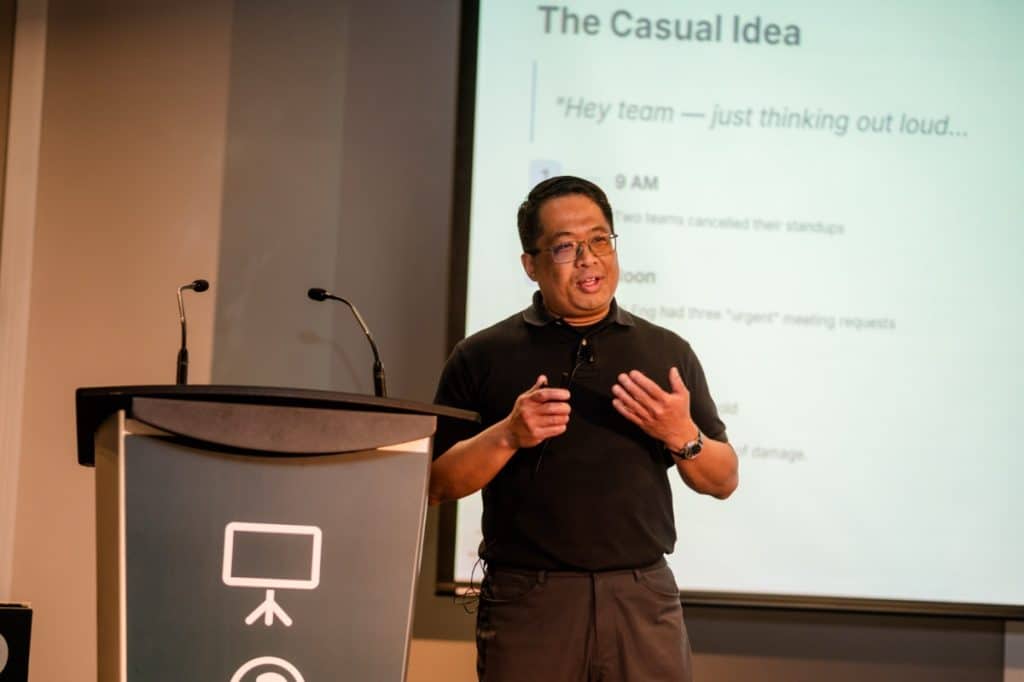
On whether AI will eventually make this class of problem smaller, his answer was straightforward: no. Speed will actually amplify it. And as long as humans remain in the loop, the underlying conditions, ego, fear, imprecision, nervousness, don’t disappear.
So long as there’s emotions involved, the human condition will exist. And it’s not a flaw. It is part of the human experience.
For the newly promoted senior engineer trying to avoid building the same dysfunctional dynamic from day one, Fung’s advice was the same three-part framework – what’s happening, why, what it means for you – applied in their own voice, not rehearsed or smoothed into someone else’s register.
Simple, as he acknowledged, but not always easy.