Voice AI Is an Infrastructure Problem, Not Just a Model Problem
Voice AI may be sold as a model problem, but the real bottleneck is whether the system can survive real-time demands, stay reliable, and do it at a cost that makes sense.
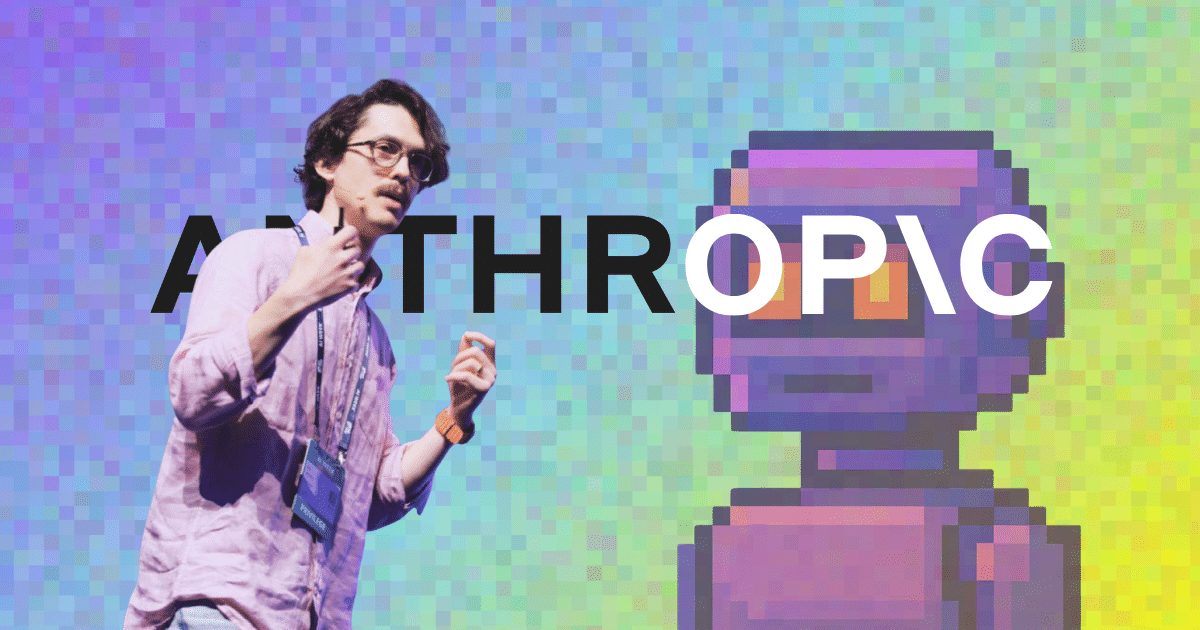
On June 9th, 2026, Anthropic released Claude Fable 5, its most powerful model ever. Fable is much faster than Opus 4.8, which is itself much faster than the ones before it. It seems like every AI model is faster, better and can do more, but what does that mean in practice? At AI Week Milano, we listened to Data Science Manager for the Research team at Anthropic, Gian Segato, explain how he views AI evolution.
In a few years, we’ve come from an AI chatbot that summarizes documents and writes a bit of code to a knowledge worker that is, by all intents and purposes, the closest thing to an “AI coworker” we have. These are jumps in capability that the general public struggles to follow, but they’re not the real reality.
Gian explained in his talk that most of these flagship and public features were developed months before Claude users used them. According to him, seeing a new feature such as coding or image creation is the best way to know where AI was a few months ago, not where it is now. Since AI capabilities move so fast, it’s hard to keep track of it all:
Products are fundamentally a lagging indicator. You cannot just judge capabilities by looking backwards. Products are built on top of capabilities.
A good (or just more realistic) way to measure the speed at which models are getting smarter is to look at a new metric that Gian suggested, which works in three steps:
Doing this gives you a clean exponential and trajectory of where you are, and where you’re going. Right now, Gian thinks that the best models can autonomously complete work that would take a human expert around two days. Of course, he’s not talking about answering our emails or vibe-coding mini games, but complex work that requires in-depth knowledge of the matter at hand and particular skills.
The speed at which models can do these tasks is, however, doubling every four months. Just a few years ago, it was doubling every seven months; the acceleration is, as Gian puts it, accelerating. This means that the capabilities of models are doubling at a rate that is also becoming faster; they take less time to become twice as efficient.
What’s happening is relatively simple: we’re just throwing more power and information to AI models, and they’re responding to it well.

For those unfamiliar with how Anthropic was created, the mention of a paper in which researchers figured out that just giving more power to AI models makes the AI models smarter came as a revelation. This means, in Segato’s words, that the line that portrays AI capability in relation to the amount of processing power is just a straight line, and one that researchers currently see no end to.
The information is both slightly concerning and very impressive. Gian noted that the line spans eight orders of magnitude, which is immense and means that AI capability can scale incredibly while still not showing signs of vulnerability. For the sake of keeping this article short and easy to understand, let’s just say that this is almost unheard of, except in some physics research and laws of nature:
Typical things we build; engineering things, societal phenomena, you two or three-x them and they break down. There’s no equation that spans eight orders of magnitude except in physics and the laws of nature.
Calling AI a “law of physics” or a “force of nature” might be something that belongs in a conference keynote and is something an AI startup is just waiting to use for its new investor pitch after listening to this presentation.
However, this also means that there’s really no way of telling how “deep” or “smart” an AI model can get if all that it takes for it to get there is just more hardware, more RAM, and more learning material. It also means that we’ll see more AI data centers as companies like Anthropic throw more chips and money to their models.

Gian continued that AI is now in the “tasks” era. This means that projects that take dozens of minutes for a human are regularly delegated to AI models, which do them easily. In six to 12 months, we’re probably going to enter something Anthropic calls the “projects” era, where AI models will be able to handle work that would take dozens of hours for humans.
By then, we’re going to be looking at the equivalent of a CEO instructing a marketing director, rather than a human assigning a task to an AI tool. Seeing as the growth is both fast and linear, we’re approaching that era whether we’re prepared for it or not.
With this growth come risks that can’t be ignored. For example, the more work models do, the less supervision is possible for us as humans. For example, if a model is doing a marketing campaign, a human can’t watch its every step:
Necessarily there’s going to be some element where we have to accept some lack of supervision. That’s both intellectually interesting and pretty scary. This is a little unsettling.
Gian’s “encouraging” words aside, this was the part of the presentation where he connected the researchers who’ve discovered the connection between power and AI model capability as the founders of Anthropic. This served as a diving board to present that Anthropic is really serious in terms of security and monitoring its models. Still, AI creators telling you they’re “doing all they can” to contain AI doesn’t really fill you with optimism.
The talk from Anthropic’s researcher comes at a time when news of Mythos and Fable, the company’s extremely capable models and their effects on the internet are making headlines. Gian echoed this by saying that AI models that might potentially be used to engineer a new pandemic, having learned all there is to know about viruses and disease, might also be the best way to find out how cancer spreads and how the brain works.
Of course, he believes that the good guys will be the best way of stopping the negative sides of AI from shining through. Whether the world feels like Anthropic are said good guys is another story entirely.
Concluding his talk, Gian said that he believes the next period of human history will be the one where we will be able to “compress 100 years of industrial and scientific revolution into a very fun and interesting decade”.