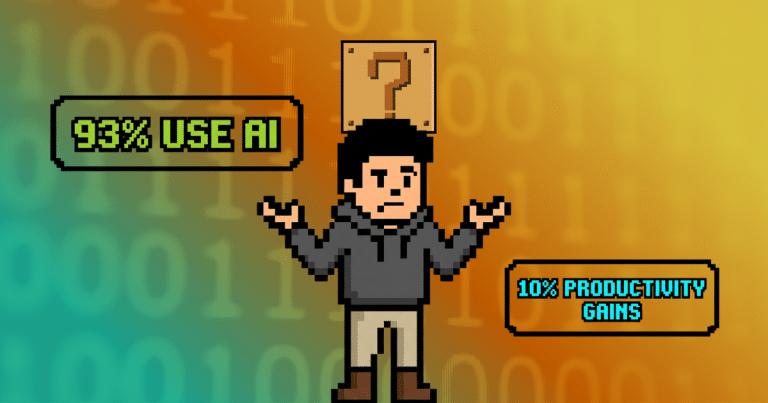
92% of developers use AI coding tools, but productivity has barely moved - stuck at 10%. Here’s why using AI doesn’t automatically mean getting more done.
As AI tools become part of developers’ everyday workflows, a lot of engineering leaders assume that getting started is just a matter of buying the right software.
What if I told you that understanding AI is a bit like juggling knowledge about Marvel, DC, Matrix, Harry Potter, Lord of the Rings, and Pokémon franchises? Crazy, right? But hear me out.
Mackenzie Jackson, security researcher and advocate, told me that AI can’t catch the bugs, but it knows which ones actually matter and provides the context teams need.
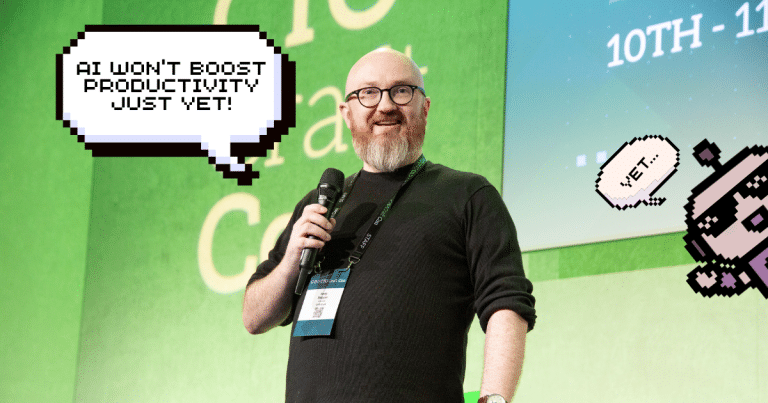
Andy Skipper, founder of CTO Craft, warns that even seasoned CTOs struggle with the pressure to deliver AI-driven productivity while balancing innovation and reality.
At the Pragmatic Summit, I heard firsthand that Uber engineers aren’t just using AI to write code anymore, they’re assigning it work. Let’s see how that plays out.
I was at Pragmatic Summit when Chip Huyen reframed the AI conversation - if any product can be generated from a clear description, code isn’t the constraint, and true value lies elsewhere.
I was in the room at this year’s Pragmatic Summit when Laura Tacho dropped the numbers: nearly all developers use AI coding assistants, over a quarter of production code is AI-written - and yet productivity gains haven’t budged past 10%.
That number is expected to rise to 65% within two years. Yet 96% of developers, according to this Sonar research, say they don’t fully trust AI-generated code.