Replit’s Nik Biridzhyan: AI Closed the Tech Gap, Not the Skill Gap
Anyone can now use the same coding agents engineers do, but Replit's Nik Biridzhyan says that doesn't make everyone a developer. The hard part is still knowing what to build and spotting good work.
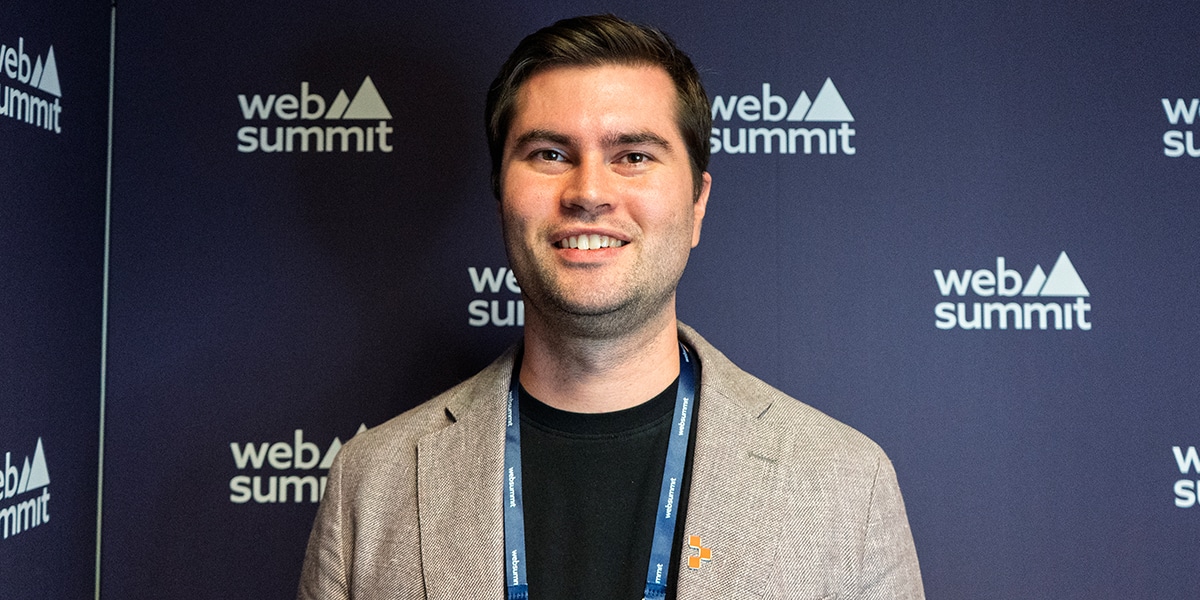
At Web Summit in Lisbon, I caught up with Nikita (Nik) Biridzhyan from Replit’s Forward Deployed Engineering team for EMEA to discuss how AI-powered development is opening software creation to non-developers, reshaping engineering teams, and challenging traditional ideas about what makes a good developer.
Vibe coding is evolving into agentic engineering
AI agents can now build whole applications from a prompt. But how far does vibe coding get you when the software has to meet real engineering standards and run in production? I asked Nik where the limits are.
He thinks the industry has already outgrown the term. After two years of fast progress, he says, we’re moving from vibe coding to agentic engineering.
For Nik, the biggest part of that shift is who gets to use these tools. People with no technical background now work with the same coding agents professional engineers do, and that’s shrinking the technology gap. Building something complex is a different story, though:
So that technology gap, I think, is narrowing now and will narrow even further with time. However, I think the skill gap remains. So knowing how to create these applications and, you know, I think especially on the more complex side of things, this is where the gap will exist.
Business users build the apps, engineers take over when they matter
With Replit’s Cloud Agents, non-developers can now contribute to company codebases. Is that real democratization, or just more AI-generated code for engineers to review?
Nik doesn’t see engineers losing their core products. Professional teams will keep owning established software, while business users build and run more apps of their own.
Every company, he says, has a pile of ideas that never make the engineering roadmap because something else always comes first. With agents, the people who had those ideas can build them, and engineering doesn’t have to own every project.
He sees the two working side by side, with a clear path for apps that get too important to stay with the business:
And funny enough, in Replit, we have a thing called graduation. We call it graduating from Replit. So when the app that a business user has created reaches that kind of level of importance where the business says, wow, okay, you know what? This is now becoming mission critical. We will actually graduate from Replit and let software engineering teams take over.
AI agents can build almost anything, as long as you know what you want
When several AI agents work on the same project, the obvious worries are technical: context management, coordination, code quality. I asked Nik which of those would be hardest to solve.
None of them, as it turns out. He says collaboration on Replit is already easy, even fun. The real problem comes before the agents write a single line, and that’s figuring out what you want and turning it into clear requirements:
I think the challenge in here isn’t technical, actually. It’s the challenge is always knowing what you want to achieve. So collaboration on Replit is super easy, and it’s honestly been a joy to collaborate with others on the projects. But it’s knowing exactly what you wanted to build and communicating that clearly, I think, remains a challenge. So having that scoped-out requirements is the biggest thing for me.
How much should an AI agent touch production? Replit lets you decide
Replit’s Monitoring Agent goes a step further. It looks into production incidents and can deploy a fix without anyone signing off. So how much control should developers hand over, especially when an automatic fix makes things worse?I asked Nik where he’d draw the line.
Replit doesn’t draw one for everybody, he says. It lets users decide, because different companies, and even different apps inside the same company, need different amounts of oversight:
So with that specific thing, we want users to choose if they want to just be notified of any issues, if they want an agent to notify them and draft a fix and then wait for their approval, or if they want to fix it completely autonomously.
Two years of AI pilots, and most companies still can’t show results
European companies are starting to roll out AI coding agents, so I asked Nik which is harder: getting developers to trust AI-generated code, or getting security teams to let those agents near critical infrastructure.
Security, he says. But there’s another hurdle too, which is convincing the business that AI is worth the effort at all. Companies have been experimenting for a while now, and most have little to show for it:
Most companies have been running pilots for the past two years without any meaningful results. So there is a little bit of convincing on the security side and also convincing on the business side: hey, this is, this is actually valuable, we should be doing that.
Taste will be the top developer skill as AI slop piles up
For my last question, I asked Nik what would make a developer valuable in 2027, if agents can write, test, deploy and maintain software on their own. I also asked what happens to junior developers if they lose the work that usually turns them into seniors.
He went straight for the skills part. He didn’t name a language, a specialization or a discipline. Instead, he offered what he called a hot take:
You ask for skills, I’ll give you one: taste. As more things are possible with AI, I think we’re entering an era where there’s a lot of AI slop. And so having taste, which is determining what’s actually quality, how you share it with colleagues, what is a good standard, and having that human determination to judge the work of AI agents, I think that’s going to be a number one skill that will determine if you’re going to be successful going forward or not.
> subscribe shift-mag --latest
Sarcastic headline, but funny enough for engineers to sign up
Get curated content twice a month
Written by people, not robots - at least not yet. May or may not contain traces of sarcasm, but never spam. We value your privacy and if you subscribe, we will use your e-mail address just to send you our marketing newsletter. Check all the details in ShiftMag’s Privacy Notice
If an AI agent learns to write data pipeline code for Snowflake, does it know how to write data pipelines, or just Snowflake code that happens to implement one? Procore's Shishir Tewari has a view, and he shared it with us.
"They just see friction versus no friction." That is how Ali Golshan, Senior Director of AI Software at NVIDIA, describes AI agents facing security rules.