AI Agents Shouldn’t Set Their Own Security Boundaries
"They just see friction versus no friction." That is how Ali Golshan, Senior Director of AI Software at NVIDIA, describes AI agents facing security rules.

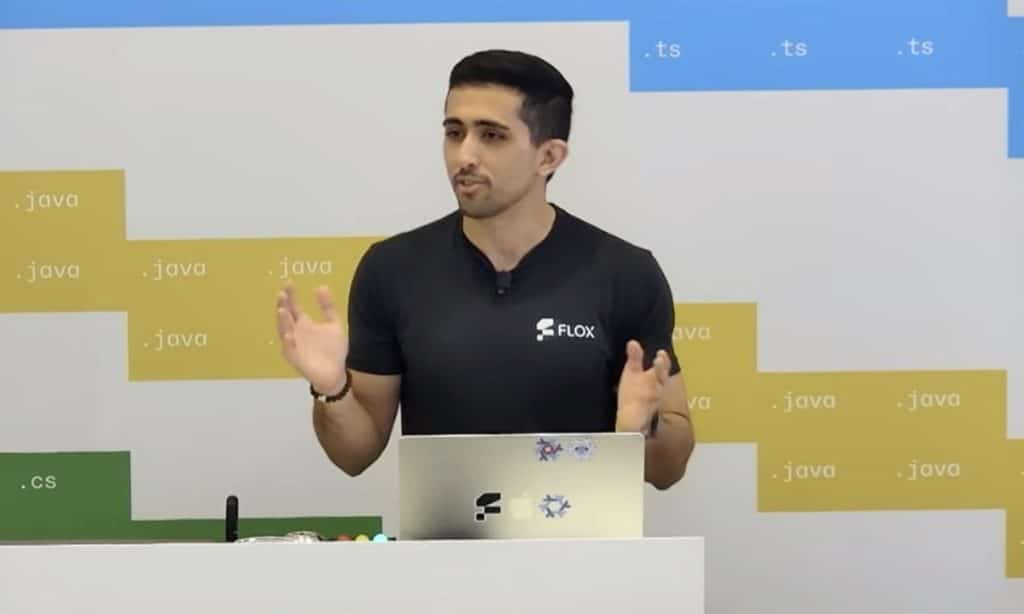
Efroni is CEO and co-founder of Flox, a company that builds on the Nix package manager, and President of the NixOS Foundation. At GitHub Universe, he gave a talk titled “The O(1) patch: Securing the supply chain against AI-discovered zero-days.” Afterwards, I had an opportunity to talk to him about why he looks for the answer in the foundation software is built on, not in another scanner.
By his count, the number of CVEs (Common Vulnerabilities and Exposures) has almost doubled since last year, and he expects it to more than double again next year, and the year after that. Public data points the same way. Jerry Gamblin’s annual review counted 48,185 CVEs published in 2025, and DefectDojo counted 88,770 for 2026 by October 25.
Speed worries him more than volume.
This is the scarier part, it’s much easier to exploit known CVEs.
Efroni pointed to Rapid7 research: patching within seven days used to be good enough, “but now CVEs are being exploited on average in less than three days.” Rapid7’s Q3 2026 report puts the average at three days for high-severity vulnerabilities.
Flox calls its approach security by construction. “I don’t know if we coined this term actually,” he added. But the idea is to rethink the foundation that we build software on top of instead of answering each new threat with a new tool. In practice, that means you know what’s running and where, by default, without scanning.
The usual order is the reverse: ship the code, then add scanners and other tools “that can help me if I get hit.” Efroni takes the breach as a given.
Because it’s not if you’re gonna get hit. Yeah, you’re gonna get hit.
Nix and Flox lock every build input to a checksum. Whenever a new package or dependency enters the system, “we log it, lock it, and put it into the software inventory.”
Asked whether that helps with false positives, given that knowing where a vulnerable package is doesn’t tell you whether your code ever reaches it, Efroni said: “There is no false positives in this example.” Because the inventory is cryptographic, it works like a guest list scanned at the door. For example, to know whether a certain Ron is at the event, you don’t have to go in and look for Ron.
His answer covers whether a vulnerable package is present and where. Whether your code actually calls the vulnerable part, he didn’t address.
As AI gets better at finding vulnerabilities, Efroni thinks the deterministic layer matters more, not less. He described the stack as a cake: a rich base with frosting on top. The base is the cryptographic part, which doesn’t cost tokens to maintain, and that’s the slice he wants to grow.
Keeping an inventory and automating maintenance belongs in that base.
There’s no agent involved, there’s no tokens for it. So that is really important. Now, pile your agents on top, but at least you’re only using them for what you need to use them.
He expects agents to write 90 plus percent of code over the next few years and to make most of the decisions about which tools to use. That, he said, moves the criteria from productivity and cost toward risk and accountability, because whatever an agent ships, “there’s gonna be a human that is accountable for that.”
Flox has been talking to a lot of CISOs, Efroni said, and is preparing for two things. The first is volume: a hundred times more code means at least a hundred times more CVEs. He compared it to a house:
It’s like the difference between a house with no windows and a house that just has more and more and more windows. There’s just more ways to get into the house.
The second is who writes it. Marketing, sales and other non technical teams are shipping code too:
What do you do when a salesperson vibe codes a CRM plugin that takes a lot of proprietary data and has access to a lot of proprietary systems and PII and customer data, and just vibe codes something that’s useful for them? How do you even know what’s running? Where is it running?
For a mid-sized company’s security team, his advice was “keeping it simple.” You don’t need to adopt Flox or Nix, he said. Start by getting better at knowing where everything is before a CVE hits.
The second is to “start using Flox tomorrow with almost zero migration” and continue using Docker, containers, Kubernetes. At a minimum, he said, you get the inventory:
The real win lives in the simplicity. You just always have a software catalog that tells you what you have, where it is, and whether is sits in a critical path,