Chris Davidson, Atlassian: “Ask AI to challenge you”
As a Solutions Engineer at Atlassian, Chris Davidson works with clients in an effort to make the most of Atlassian's tools and has first-hand experience of how we adapt to using AI.
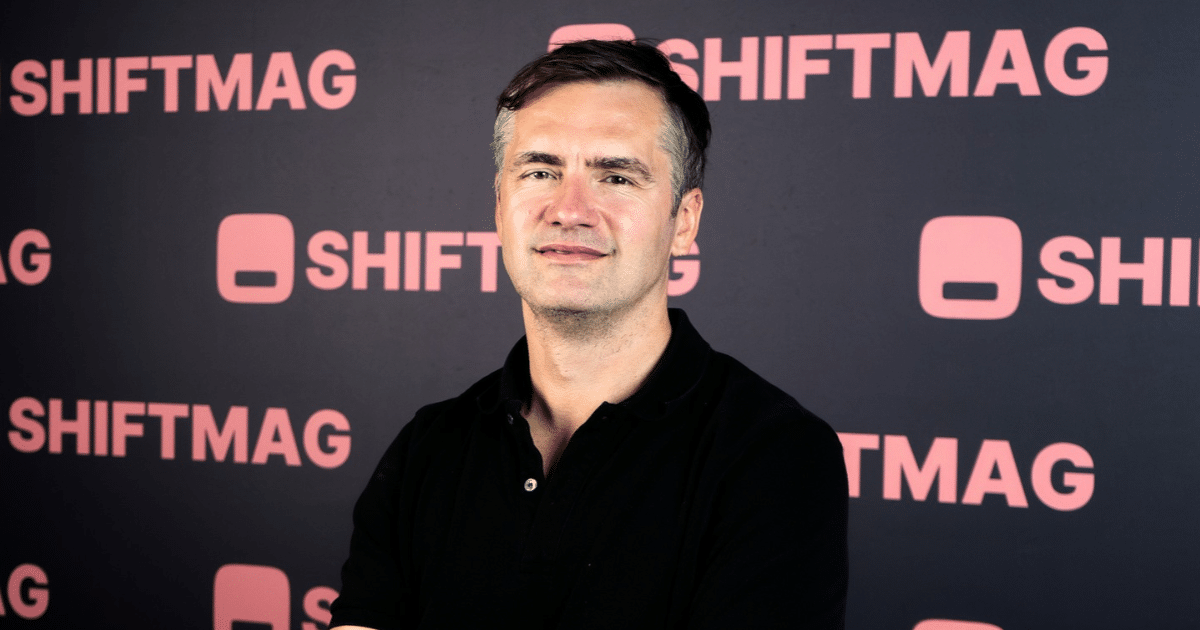
Amir Salihefendic has been building Todoist for 20 years, but he also started his career as a developer who gradually discovered his entrepreneurial ambitions. That experience shaped his talk at the Shift conference, where he focused on developers who are considering starting their own companies.
As someone who has spent nearly 20 years following developers, founders, and tech entrepreneurship, I spoke with Amir after his talk about what developers need to know to become founders. We discussed how AI is changing software development, junior hiring, product building, and what one person can achieve.
What happens to developers now that AI can write code? It has probably become one of the most common questions at tech conferences over the past few years, ever since the AI revolution began. Naturally, I opened my conversation with Amir by asking exactly that.
Amir has programmed since childhood and spent over 20 years developing his own Vim configuration, which he says became one of the world’s most popular. Today, he barely uses the editor the same way and rarely reviews code in detail (except when security, models, or other areas need his attention).
Still, he doesn’t think developers are becoming irrelevant. Quite the opposite:
My contrarian view on this is: developers are still super critical, because I don’t think code was ever the objective. What is objective? Solving problems for customers, building systems.
In other words, writing code was never the whole point. Code serves as a tool, while solving customer problems and building systems remain the real goals.
What changes now is the level at which developers work. Managing agents, configuring them, coordinating multiple systems, and working with what Amir calls agent swarms all matter more and more.
That shift also dramatically changes the leverage a single developer can have:
I think the difference between a good developer and an amazing developer is not a 10x anymore. It’s 1000x.
That raises another question: how can someone who enters the industry today learn what good engineering actually looks like?
Amir sees a potential advantage for junior developers here. Unlike seniors, they do not carry 20 years of habits that they first need to unlearn – they can start from first principles and treat agents, agent swarms, or systems that build other systems as a natural part of development, instead of trying to retrofit them into a workflow they have followed in the same way for years.
But that advantage has its limits: AI models still cannot replace the kind of experience that helps developers recognize whether a solution is actually good:
This said, I do still think the models are not good enough for a lot. Especially architecture.
AI may let one person build more, but a founder’s main job is still the same.
I asked Amir what developers should focus on when they also have to think about design, marketing, sales, hiring, and fundraising. Once again, he came back to the basics: customers:
Again, I’m actually not sure how much has changed, because I think in the end what you’re building for is customers, it’s other people, it’s empowering them. And you need to find out: how can you get customers? How can you build something useful? And that is maybe the P1. Everything else, attending conferences, getting investment, should not be a P1.
He says new founders often reverse that order. They start with incubators, try to raise money, or look for a co-founder, and only then ask whether anyone actually needs what they are building.
None of those things lack value. They simply do not belong at P1:
But P1 is finding customers, finding something useful, building something useful, trying it out, learning from that, getting kicked in your face. And then you go back and you rebuild and you learn. And also this loop is very critical.
In other words, build something, put it in front of users, make mistakes, learn from them, and build again. Amir sees that loop as one of the key parts of building a company.
From the very beginning, Todoist followed a different organizational model from the classic Silicon Valley playbook, but Amir did not choose that path because he had a grand theory about the future of work.
The company went remote because he lived in Chile and simply could not find enough people to hire locally.
At one point, he actually planned to move to Silicon Valley and start the company there, but then he met his wife and changed his plans.
That experience shaped another piece of advice he gives developers who want to become founders: instead of copying someone else’s formula, start with your own circumstances, abilities, and strengths:
I do think you need to work in what kind of environment you have, what kind of skills you have, what kind of strengths you have, and then work from that.
For that reason, founders should not treat his remote model as a template that automatically works for every company.
The same goes for following other founders too closely:
You follow what I have done, or you see something on X or some other founder, and then you just blindly follow them. That’s probably not going to lead to a very good outcome.
AI has become impossible to ignore, swallowing the tech industry’s attention. Almost every startup wants to become AI-native, conversations turn to agents, and everyone looks to Silicon Valley again.
So I asked Amir whether developers outside this wave should feel they’re missing out. He gave one of the most direct answers of our conversation:
In a lot of cases, if you actually start an AI startup right now, you’re probably too late.
For him, understanding technological S-curves matters much more: founders need to recognize which stage a particular technology has reached.
Ideally, he says, you enter a trend before exponential growth begins. AI may already be deep into that curve, while space could still be near the start.
The reverse is true too: in mature markets, making a significant impact is much harder:
For instance, if you do SaaS right now, that is freaking mature. You have very, very entrenched companies. Of course, maybe by some miracle you can do something that’s 10x, but it’s highly unlikely.
Rather than chase the hottest field, founders should understand where the market and their company sit on the S-curve and where they want to compete. The same applies to fundraising: know what game you’re choosing to play.
Todoist has remained bootstrapped, and when I asked how he thinks about company financing today, Amir returned to the same starting point: founders who lack traction, customers, proof that the product works, or a personal track record will struggle to raise money.
His preferred order therefore remains the same. First, build, learn, and find customers. Only then decide whether fundraising makes sense at all.
But another part of that decision matters even more. VC money comes with very specific expectations about what company success should look like:
VCs want to see billion-dollar outcomes. If you don’t have a realistic way to achieve that, even if you lie, say, okay, this is our path, but you don’t really believe it, at some point they are going to push you to their direction, and then they’re going to mess up your company, because that is what you’re signed up for.
The problem, then, does not lie in the VC model itself. The problem appears when a founder accepts that kind of capital without actually wanting to build the kind of company that the VC game requires.
That is one of the reasons Amir has never raised money for Todoist:
Why I have never raised money for Todoist is because I don’t want to build a billion-dollar ARR business.
That does not mean Amir sees bootstrapping as an easier or more relaxed alternative to the VC path.
I also wanted to know whether people have romanticized bootstrapping in recent years. Founder stories often present it as a way to avoid investor pressure, keep control, and build a company at your own pace.
Amir dismantles that image:
But I think bootstrapping is incredibly hard. It’s not the easy path. What I actually tell my team is: we are climbing Mount Everest without oxygen, and with oxygen is the capital. That is what you’re signing up for.
So the real question is not whether bootstrapping beats VC funding. Founders need to ask what they actually want from their company and from their own lives.
Not every company fits the VC path. At the same time, bootstrapping comes with serious constraints of its own.
Building a company for 20 years doesn’t mean 20 years of growth. Amir recalled that Todoist and Buffer followed a similar path: years of growth, then a plateau and slight decline.
As he puts it, growth can make you think you’re “the freaking smartest.” When it stops, you realize how much needs rethinking. At Todoist, that meant major culture changes, including dropping one word from a core value:
We actually had this core value called ambition and balance. And then we just removed balance.
Amir says that at one point he became deeply unhappy with how things worked inside his own company. He did not think the company showed enough ambition, he did not like the level of output, and he felt that the team no longer pushed boundaries.
The cultural shift went beyond words. During that process, the company let some people go, while others chose to leave:
And I think right now we have a lot more calibrated company because of that.
He sees an important lesson in that experience for new founders. The culture you create at the beginning, the first people you hire, and the first core values you define can have a huge impact on the company you eventually build.
Once the company grows, changing those foundations becomes much harder.
At the end of our conversation, I wanted to know what comes next, and Amir described two very different possible futures for Todoist.
In one, he could cut 50 percent of the team, generate much more profit and, as he joked, perhaps buy himself a small yacht, while in the other, the company would take on a much bigger problem, which is ultimately the path they chose:
Or we can just say, okay, let’s freaking solve a much, much bigger problem. So for us, we are going to create a suite of apps.
The first product in that expansion will focus on automations:
Honestly, I think what we have done technologically, but also on product side, will be really, really cool for people to see, because everything is natural language. And you tell what you want to build, and then the system builds it for you. And it’s quite affordable. So automations will be the first leak. The other one is team communication.
When Amir mentioned team communication, I asked whether that meant a return for Twist, Doist’s asynchronous team communication app, which the company developed as an alternative to real-time workplace chat.
Amir replied:
It’s coming back in a very strong form.
That fits with the broader direction Amir described for Todoist, as the company now plans to expand beyond its core product and build a wider suite of apps.