Build your software like a motorcycle
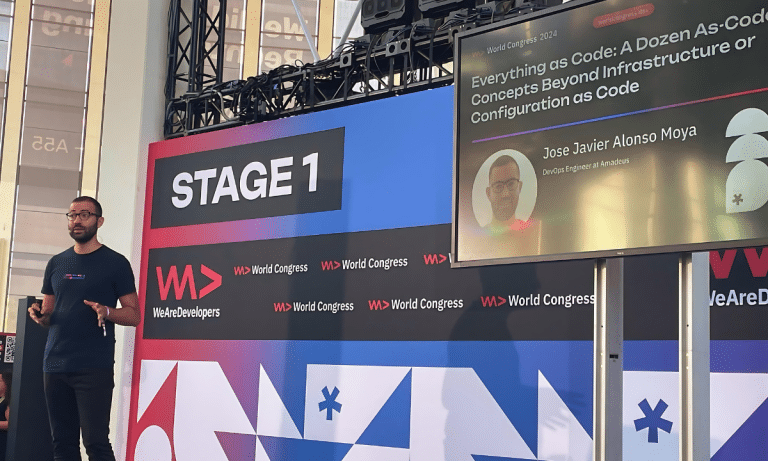
Discover how Jose Javier Moya's motorcycle analogy reveals the secrets of building a successful software deployment process through blueprints, automation, and quality assurance.

The developer already tested it, so why do you need to test it too?
If you work in tech, you’ve probably heard this sentence a thousand times.
A developer writes the code, runs the checks, all the tests pass, and the feature works.
So why do companies still hire Quality Assurance (QA) engineers? Are we just here to double-check developers’ work, or is there a deeper purpose?
The short answer is: no.
The longer answer is that there’s a fundamental difference between writing code and creating a great customer experience. The value of QA lies in perspective, risk awareness, and understanding how people actually use a product.
To build a truly great product, you need two very different mindsets: the builder and the chaos maker.
A developer’s brain is wired for creation, logic, and structure. While QA starts the day with a finished product, a developer starts with a blank screen. Their job is to create something out of nothing and assemble the many moving parts of a complex system into something that works exactly as intended.
Developers are responsible for creating the magic. To build even a single feature, they have to master a labyrinth of tools, frameworks, databases, and configurations. They carry the responsibility of making sure the architecture is secure, the system can handle heavy load, and the new code integrates cleanly with millions of lines of existing logic. Their work is highly complex and demands deep understanding, precision, and sustained focus. They are the architects of the digital world.
Because their primary mission is building and stabilizing the system, their testing mindset naturally reflects that. When developers test their code, they are checking whether their blueprint holds up. They focus on the happy path, along with a few common scenarios, in a controlled environment, using standard data to confirm that the core functionality works as intended. Their attention is on making sure the foundation is solid.
Think of a developer as an architect and engineer combined. They design a beautiful, highly complex door, check that the handle turns smoothly, inspect the hinges, and confirm that it opens perfectly.
Now what? Aren’t developers already responsible for the whole thing?
While developers are incredibly skilled at what they do, they cannot be expected to carry the entire burden of the user experience alone. That is where QA steps in – to relieve some of that pressure and help refine the product for the real world.
If a developer’s brain is wired for creation, a QA’s brain is wired for exploration and chaos. The goal is not to prove that the software works, but to discover what happens when the scenario is not perfect. We test unusual cases, unpredictable behavior, and the edge cases that real users may actually trigger. We test for the messy real world.
Because of this, QA goes far beyond engineering. The work calls for empathy, human psychology, and an eye for the emotional, reliability, and invisible factors that make customers want to use a product.
As a QA, I’m constantly stepping into the user’s shoes and asking myself a very different set of questions:
To make this point come to life, let me share a personal experience.
I’ve seen that even a large team of skilled developers means every single scenario is not automatically covered. Tight deadlines, heavy workloads, and the sheer mental focus required to build complex architecture make it nearly impossible for any single perspective to catch everything. Once a feature is done with implementation, it’s QA’s turn to step in, look beyond the happy path, and hunt down every possible edge case.
For instance, when new feature was implemented, it was time to test it. My team and I ran automated tests for our Voice APIs.
During testing, I decided to try something slightly unusual: I sent a call using a sender name that contained a space. Immediately, the calls started failing. This turned out to be a critical issue. If a real client wanted to do something as simple and common as putting a space in their sender name (e.g., “Global Bank” instead of “GlobalBank”), their entire voice campaign would fail. We only discovered this flaw because we had an automated QA project specifically designed to stress-test the exact parameters our clients use daily, which even shows the importance of regression tests and their benefits before the release.
Another instance happened while I was testing the delivery reports for our system. The documentation stated that the record limit field was limited to 1 to 1000. My QA brain asked, “What happens if a user accidentally types 0?” When I entered 0, the system crashed and returned a 500 Internal Server Error.
Technically, it was just a wrong number. But from a customer experience standpoint, this is a big deal. A 500 error tells the client, “Your servers are broken,” which causes panic, especially during real-time actions. It should have gracefully returned a 400 Bad Request, which politely tells the user, “Oops, your input was invalid, please try again.”
Logically, it makes no sense for a user to request 0 records. But it is our duty as QA to make sure that even when a user does something illogical, the system handles it elegantly instead of catching on fire.
The chaos isn’t always in the backend, either. Recently, while performing manual UI testing, I found a scenario where a user could fill out an entire complex form, only to find that the “Save” button remained permanently disabled because of a tiny edge-case conflict in the UI logic. Imagine the frustration of spending ten minutes typing out intricate details, only to be trapped at the finish line and unable to save the work.
All of these instances prove why additional testing is necessary. It is incredibly easy for crucial edge cases to slip through when a team’s primary focus is building complex core functionality. No one should set a limit to 0. A sender name shouldn’t break an API. But humans aren’t strictly logical, and neither is the real world. That is why QA exists.
Ultimately, this story comes back to the same point: success. Despite our different approaches, both teams are chasing the same finish line. We come together, we collaborate, and we bring an idea to life in the best possible way.
Both developers and QA want the same thing: to deliver a product that is simple, easy to use, unique, and highly functional. We want to build something so reliable and intuitive that the end user does not even have to think about how it works under the hood – it just does.
Because my job involves finding edge cases, logging bugs, and occasionally breaking a developer’s hard work, it is easy for outsiders to assume that developers and QA are at war. But that is far from the truth. We are not enemies; we are an essential partnership. We are a continuous feedback loop where logic meets empathy.
Just like a human being cannot function with only half a brain, a truly great product cannot survive in the wild with only one mindset. It needs the builder’s solid foundation, and it needs the chaos maker’s reality check.
The developer brain ensures the software is built right. The QA brain ensures we’re building the right software for the customer. Together we create the product that customers love.
Next time someone asks, “The developer already tested it, why do you need to test it too?” you’ll know exactly what to say:
Code lives on servers, but customer experience lives in the real world, and QA is the bridge between the two.

