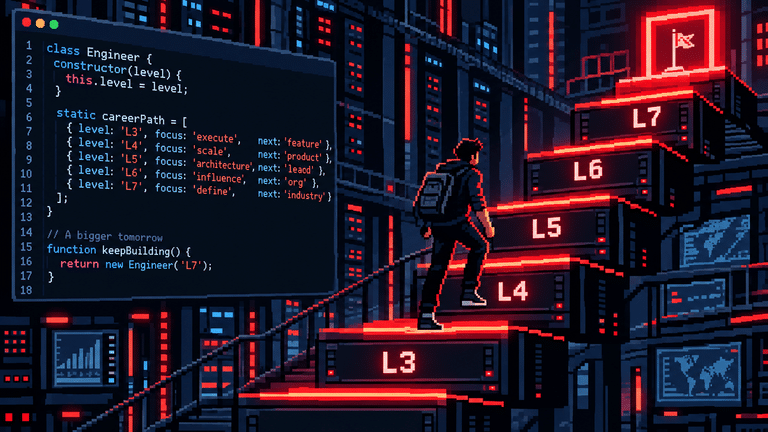
At NVIDIA, “Senior Software Engineer” can mean three different levels
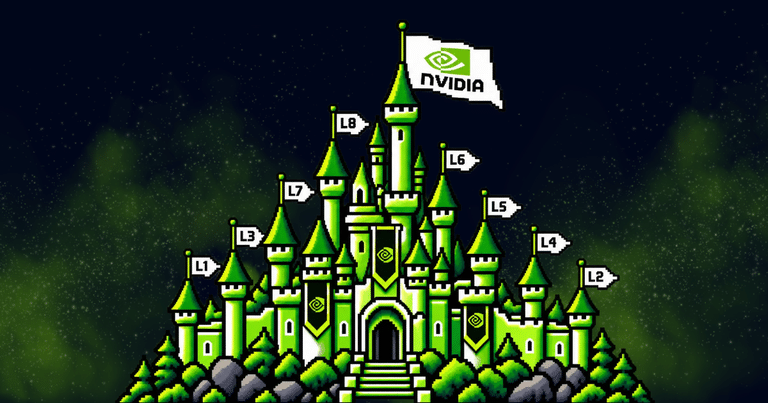
NVIDIA’s career ladder isn’t linear, and it’s pretty hard to make sense of from the outside. I did some digging and asked around, so you don’t have to.

Let’s start with a cliché: AI has quickly become part of everyday work in tech, reshaping what it means to be a developer.
A field that, just a few years ago, felt stable and full of opportunity now comes with more uncertainty -breaking in is harder, and staying relevant takes constant effort.
We spoke with software engineers who have more than 10 years of experience to hear how they’re navigating these changes.
Denis: “I was always looking for ways to improve my workflow, so I could spend more time on the interesting, creative parts of the job and less on repetitive, routine tasks. I focused on really understanding problems and possible solutions, which meant building deeper knowledge rather than relying on quick fixes from the internet. I read books, followed blogs, attended both live and online conferences, and learned from experienced people in the industry to get different perspectives and form my own conclusions.
To stay relevant, I focused on real user use cases and the problems behind them, building solutions that create real value.
I also made a point of staying close to the products, users, and solutions over time to see what actually works and what doesn’t, regardless of hype or trends.

Working in teams and collaborating closely helped a lot, as there are always tough questions and healthy discussions that lead to better decisions in the end.”
Marina: “Staying relevant over the years came down to curiosity and hands‑on learning. I regularly read blogs and watch online conferences to keep up with new technologies, but I learned the most by trying things out through small POCs. Experimenting helped me understand problems more deeply and see what really worked.
Changing teams also played a big role. Working with people who had different backgrounds and experiences exposed me to new ways of thinking and pushed me to grow.
Finally, working on real products in production environments (especially in larger teams) taught me lessons you simply can’t learn alone. Collaboration, shared ownership, and learning from others helped me continuously adapt as the industry evolved.”
Marko: “For me it’s a combination of continuous learning and a strong focus on fundamentals. I always tried to explore new technologies and different domains, but with an emphasis on really understanding the core principles behind them. That way, the knowledge stays useful even if my career moves in a different direction, and it becomes much easier to build on top of it later.
Just like for the other guys, another important factor was working on real products running in serious production environments, especially in larger teams. Collaboration, communication, and learning from others in a shared codebase bring insights you simply can’t get when working alone. Those experiences helped me grow not only technically, but also in how I approach problems and make decisions in the long run.
I’d describe myself as a cautious early adopter. I enjoy experimenting with new technologies, but I try to understand the fundamentals behind them first, so I can evaluate where they truly make sense and how they contribute real value rather than just following hype.
Finally, self-reflection played a big role. Regularly asking myself what skills I’m missing, how I can contribute more to my team or company, and then actively working towards that has led to many good long-term career decisions.”
Mario: “Talking to other people, watching what others build, and experimenting myself plus exploring open source projects, YouTube videos, and Udemy courses on 2x speed to quickly understand what’s possible with unfamiliar tools. I also follow Hacker News and similar newsletters.

But staying relevant isn’t just about knowing what’s new; it’s about knowing what’s actually worth adopting – and when.
Understanding the high-level concepts and the problem I’m trying to solve is what allows me to pick something that looks like the right tool. After that, trying it out and getting first-hand experience: how it feels under the fingers, and whether it really solves my problem and makes my life easier – is mostly the deciding factor for me, but not the only one. If I’m doing a quick throwaway POC, I can try anything and really find the best tool.
But if I’m working in a team environment where cognitive load is already high, I’m careful not to introduce new technologies every other day just because it’s the new cool shiny thing – even if it actually is the best tool. It’s a tradeoff, and one that needs careful consideration. And sometimes the best isn’t even needed – something that works is good enough.”
Denis: For long-term success (whatever that is), it’s generally better to develop M-shaped skills. That will take some time, but only with great collaboration and multiple deep expertise areas can you be innovative and versatile, bringing measurable value and not be easily replaceable.
Marina: Earlier in my career, I believed that being a T‑shaped developer was the ideal path and I assumed that trying to learn more than one thing deeply would only lead to superficial knowledge and that focusing on a single specialization was the safest way to grow. Over time, my view changed.
Through real-world experience, I realized it’s possible to build strong, meaningful expertise in multiple areas without losing depth. As systems became more complex, having deeper knowledge across several domains helped me understand the bigger picture better, make better technical decisions, and collaborate more effectively with others.
Today, I believe long‑term success comes from combining depth with breadth – developing strong expertise in more than one area and continuously expanding that range as technology evolves. This flexibility has helped me stay relevant and adapt as roles and technologies have changed.

Mario: I wonder if it’s possible to be M-shaped 🙂 For a long time, I was a firm believer that T-shaped is the way to go – a broad overview, but with at least one area of genuine deep expertise. And I still think that’s a solid foundation for any engineer.
But over 20+ years, curiosity kept pulling me in different directions: low-level Linux internals, networking, compilers, containers, orchestration, and large-scale distributed systems, working at different layers of the stack. And each time, I went deep enough to solve a real problem. That experience adds up over time.
Understanding the problem and figuring out which layer it needs to be solved in matters more than the technology layer itself, and then it’s about stitching everything together.
Do that long enough, across enough domains, and you naturally grow more spikes. So my view has evolved – I started as a T-shaped believer, and somewhere along the way I became something closer to M-shaped. Not by design, but by following the problems. And if you ask me what I’m an expert at specifically, I’d say solving problems, if that counts as expertise. That’s at least what I currently strive for.
Marko: Today, I’d describe myself as somewhere between T-shaped and M-shaped, maybe N-shaped, still evolving. Early in my career, the T-shaped model made perfect sense, broad knowledge with depth in one area. Over time, as access to knowledge became easier and technologies evolved faster, I realized how valuable it is to develop depth in multiple areas
What ties all of this together is problem-solving. Technologies change, but problems remain. Being able to learn continuously, adapt, and apply concepts from one domain to seemingly unrelated problems becomes incredibly valuable over the long term.
If I were to advise myself 10 years ago or to others today, it would be to stay curious, keep learning, and surround yourself with people you can both learn from and teach. Also, don’t be afraid to broaden your horizons, look for ways to contribute beyond your narrow specialization, pick up complementary skills, and take some risks. Growth often happens outside your comfort zone.
Mario: AI impact is real, especially in engineering. We’re much faster at writing code, and I can smart-search unfamiliar codebases and quickly understand how things work (something that used to take a huge effort).
But there’s a price.
The amount of generated code is huge, yet humans still need to review, understand, and own it. AI isn’t the one waking up when something breaks. Creating PRs with AI is easy, being responsible for them is another story.
Our role has shifted to making sure code that looks ok is actually ok – fits the intended architecture, the broader system, the business rules, all the things AI isn’t aware of. The value is the same: understanding whether the code works as intended and preventing it from degrading into a ball of mud nobody can understand or fix at 3am.
What’s changed is how much harder that challenge has become with code being generated at this speed. Young developers are in a tight spot – suddenly expected to skip writing code by hand but still have the same depth of understanding.
And I’m not sure you can skip that part. There’s something about writing code by hand, hitting a wall, debugging it yourself, and feeling the pain of it not working that builds intuition you can’t shortcut. Even if AI is faster and easier. The best advice is to learn the concepts, fundamentals, and engineering best practices that hold regardless of AI.
You need to be able to look at AI-generated code and know whether a for loop is acceptable or a dictionary lookup fits better, that’s software engineering 101. AI can generate the code, but we still need to understand whether it actually fits.
Write as much code by hand as you can. Use AI to review it, ask for other options, and have it challenge your approach, and then actually think through the answers. That way you learn faster while still building real understanding.
And don’t skip debugging AI-generated code step by step; I do it regularly. It’s how you move from just looking at code to actually feeling it. That difference becomes obvious once you try it.
You’ll often be surprised how much you miss just by reading – sometimes it’s “this is not how I thought it worked”, sometimes it’s “I did not expect this at all.” Both are valuable, and both come from actually stepping through it.

Marko: AI tools already have a huge impact on my daily work, from writing code and understanding codebases to reviews, idea generation, debugging, and learning new topics. Overall, I see AI as a strong positive force for developers. It significantly reduces the time spent on repetitive or low-value coding tasks and frees up more space for thinking about architecture, system design, and solving complex problems that truly matter in production.
That said, some things won’t disappear. Understanding the problem and broader context, making architectural trade-offs, communicating well, and taking ownership are still firmly human. When something breaks at 2 a.m., it’s still engineers who make decisions and take responsibility. AI is powerful, but only as effective as the person using it.
For junior developers, don’t skip the fundamentals. Expectations are higher than ever, but strong foundations are key for a sustainable career. The good news is that access to knowledge and AI tools is better than ever. Use AI to accelerate learning, not replace understanding. Give yourself time, build experience, and master the basics—that investment pays off for decades.
Marina: AI tools will significantly change how developers work, but I don’t see them replacing strong engineers. Instead, they will amplify those who understand what they are building. For younger developers, the key is to learn with AI, not just watch AI work.
It’s important to question AI output, understand why it made certain changes, and how those changes affect the system. Treat AI as a learning partner rather than a shortcut. Blindly accepting generated code can limit growth, while actively analysing and improving it builds real expertise.
Younger developers should also focus heavily on architecture and system design. When you understand how systems are structured, how components interact, and what trade‑offs exist, AI becomes far more powerful. It’s much easier to ask the right questions (and get useful results) when you already understand the problem space.
Denis: AI tools have made coding skills almost irrelevant. Still, other skills and practices related to quality, such as trunk-based development, TDD, continuous delivery, modularity, cohesion, DDD, etc., are more valuable than before.
AI tools are a powerful amplifier, and they need guidance, so software engineers with those skills will remain relevant and in demand for a long time. Understanding of the (business) problem and the solution shouldn’t be outsourced to the AI. Software engineers still need to understand trade-offs, architecture, and code.