I Talk to Production Every Morning. It Talks Back.

A lot of people are leaving software engineering because agent-based workflows killed their joy. I don't have that problem; I never liked the job in the first place.

Once again, we brought together some of the finest minds Infobip has to answer tricky questions about the future of software.
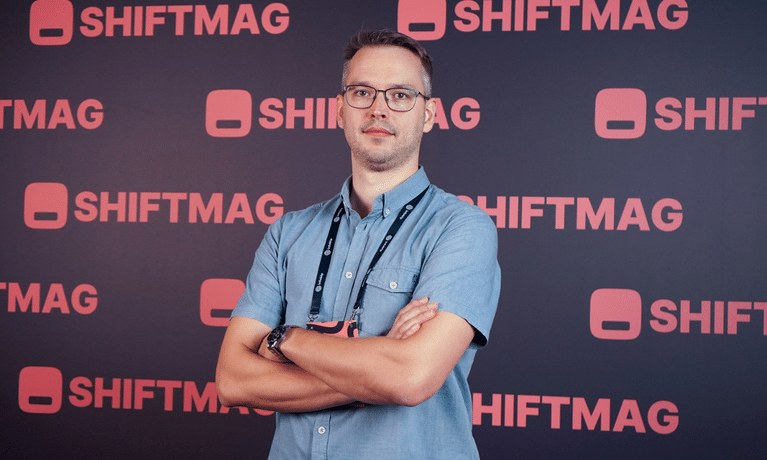
This time around, we spoke to four Infobip engineers about how they use AI in their daily work and how they view the AI revolution happening now.
With rapidly changing AI infrastructure, the things that used to be normal in software development are getting different, but some things stay the same.
Petar Dučić, Engineering Director, said that the company’s mantra “you build it, you own it” has remained the same in the AI era. This simply means that engineers are responsible for whatever they build.
Senior IT Research Scientist Ante Kapetanović, added that engineers need to separate their work phases efficiently:
You have to separate your research phase, your planning phase, and your coding implementation, whatever phase. This ultimately means that you own each step of the way. And basically, it is not AI-assisted coding, it is more human-assisting AI.
It’s true that using AI tools is, in many cases, a cheaper alternative to real people, but Petar pointed out that engineering is now becoming even more necessary, because there’s so many things that can go wrong, and we need real people to check them and undestand what’s going on.
Senior Software Engineer Rino Čala pointed out that there’s three types of mistakes agentic tools make: logical mistakes, code-based mistakes and security mistakes. The solution is, as Rino puts it, just more tests:
So it is definitely important to run tests, to run some local tests, CI tests, and do some static checks as well.
Zvonimir Petković, Staf Engineer, then explained that security issues are the number one flaw with AI software tools:
Security is the main risk with deploying Gen-AI generated code. With the whole Vibe coding setup, nobody looks at the code, and oftentimes we have also non-engineers deploying code. The hiding sensitive data within the source code itself, this is the number one problem.
The second problem for Zvonimir is scalability. Something that is built in a couple days might work fine for a small team, but cannot be scaled to 5,000 people easily.
A stark contrast to the narrative of AI taking away jobs for engineers is that, with more people actively using AI, there’s a bigger need for someone with a technical background to help with not just support, but education.
“We’re slowly becoming context engineers”, added Ante, saying that engineers are now spending a lot of time managing their context in different AI tools. He is personally a big advocate for writing your own code and feels like this is a major part of being an engineer. Still, Ante admits that might not be the case in a couple years.
Zvonimir, interestingly, had a take about exactly that:
The total trend is that in a few years’ time, we’ll have the situation where nobody writes the code manually. Software engineers will be like persons who are the experts in that field, so they will be able to review what gen AI has generated.
In conclusion, as Rino puts it, engineers are now more in the role of orchestrators and organizers than they are code writes, since they spend a lot of time managing AI models to do things properly.
Want to hear more? Check out the video.
Special thanks to our fellow colleagues at Infobip, the publisher of ShiftMag!