License Laundering and the Death of Clean Room

A canary died in the open source coal mine and a hundred people showed up to argue about the autopsy.
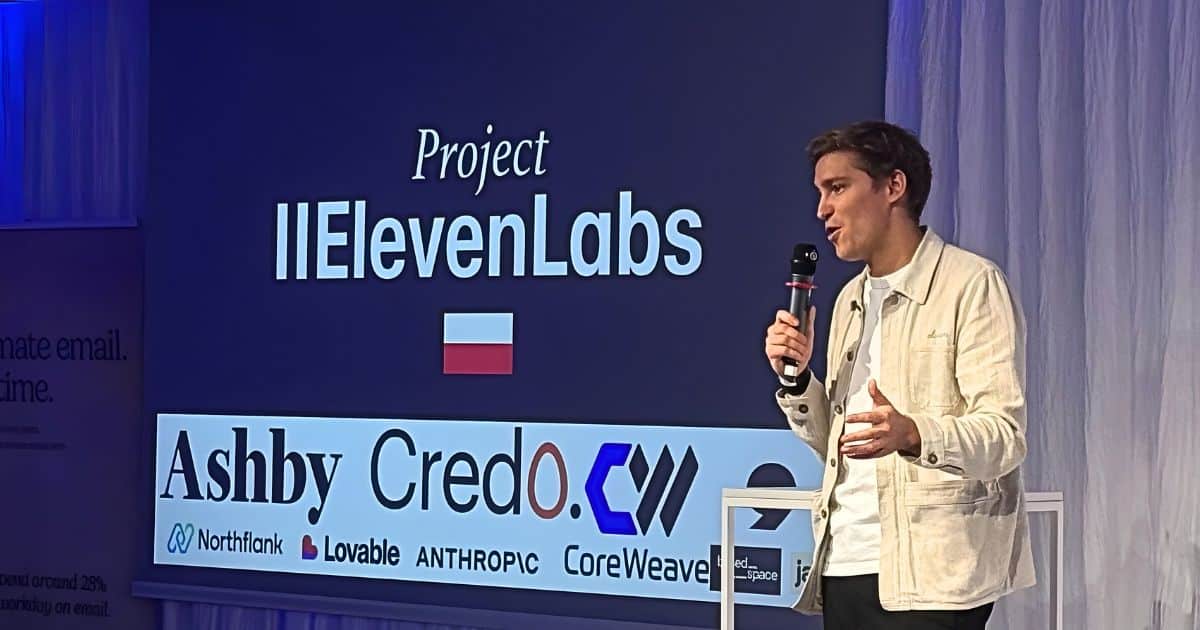
At the beginning of December, Warsaw transformed into a buzzing hub of innovation, as developers from 17 countries came together for an intense 20-hour sprint at the Project Europe x ElevenLabs hackathon, crafting bold, voice-driven experimental projects.
The goal? Experiment with ElevenLabs technology and build something – business case optional.
The hackathon ran across two tracks:
While one track raced after technical brilliance, the other ran wild with imagination and creativity. Together, they proved exactly what the event set out to show: Europe’s engineers can innovate across both worlds when given the freedom to experiment.
ElevenLabs’ return to Warsaw with this hackathon was intentional. As CEO Mati Staniszewski noted, this city isn’t just another dot on their global map:
This is where me and my co-founder Piotr Dabkowski first spent weekends building small experimental projects that would eventually evolve into what Forbes called the “multi-billion-dollar voice of AI.”
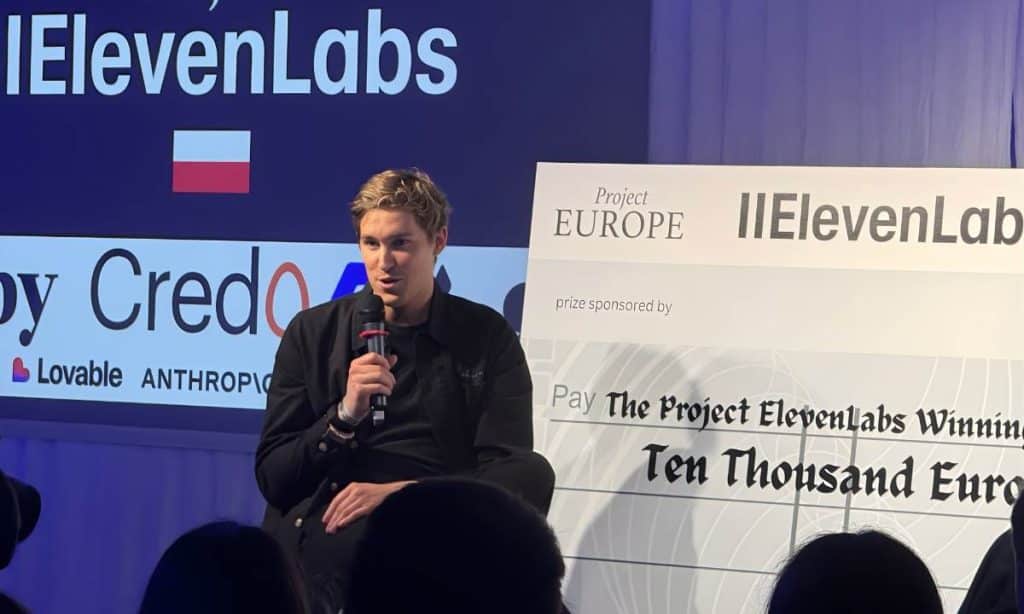
So, bringing the hackathon to Warsaw wasn’t just about shipping prototypes, it was about returning to the environment that shaped the company’s earliest ideas and inviting a new generation of builders to do the same.
Mati underscored something the broader tech community often underestimates: the talent is here – deep maths and CS backgrounds, strong ownership, and a mindset that gets excited by constraints.
Many of ElevenLabs’ most impactful contributors come from this region, and Mati’s message to founders and engineers was clear – don’t think locally:
Aim global from day one. Iterate in public. Move fast. And believe that teams here can genuinely compete with the sharpest builders anywhere in the world.
Many teams gravitated toward conversational agents or creative audio experiments. DevTierUS from the US went with molecular design and drug discovery. Their project tackled a critical problem: how medicinal chemists search for alternative molecular structures without violating patents – an area where AI is already reshaping research workflows.
First, we focused on identifying bioisosteres – chemically modified structures that mimic the biological behavior of patented or expensive molecules. For pharmaceutical researchers, these alternatives are essential for maintaining efficacy while navigating complex intellectual property landscapes.
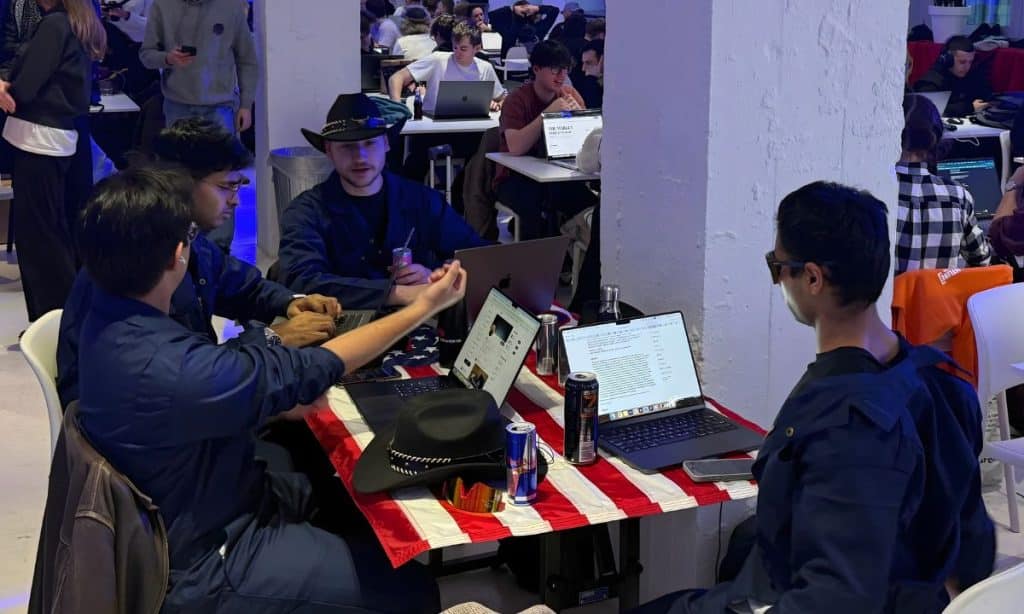
Despite advances in biotech, many medicinal chemists still rely on outdated tools – manual notes and siloed software. The team saw both a gap and an opportunity. As team member Pranav Iyer put it:
Vertical AI gets a lot of attention, but many fields still run on pen and paper. We saw a chance to bring AI into those workflows.
To build their solution, they kept the stack simple: TypeScript on the front end and Python on the back end. The innovation was in the pipeline. Drawing on teammates’ biotech experience (including one in large-scale drug discovery) they implemented a sequential AI-driven process: identify the molecule, break it into building blocks, and use AI to search massive chemical spaces for viable alternative fragments.
This approach surfaced dozens or even hundreds of substitutes – what once took days or weeks can now be done in minutes. You can check their video demo here and their GitHub on the link.
Another team, UK students now calling themselves HackAvengers, took the hackathon in the opposite direction. Their project combined education, gaming, and immersive voice interaction: a first-person language-learning game powered by ElevenLabs’ multilingual real-time voices.
Since the team shared an interest in games and languages, the concept came naturally, as noted by Natalie Chan:
Almost every hackathon we’ve ever done, we’ve had this underlying theme of games. What’s the best way to combine education and games? Language learning.
These personal experiences shaped the project’s ambition: to make language learning feel like entering a game world, not just completing exercises on a screen.
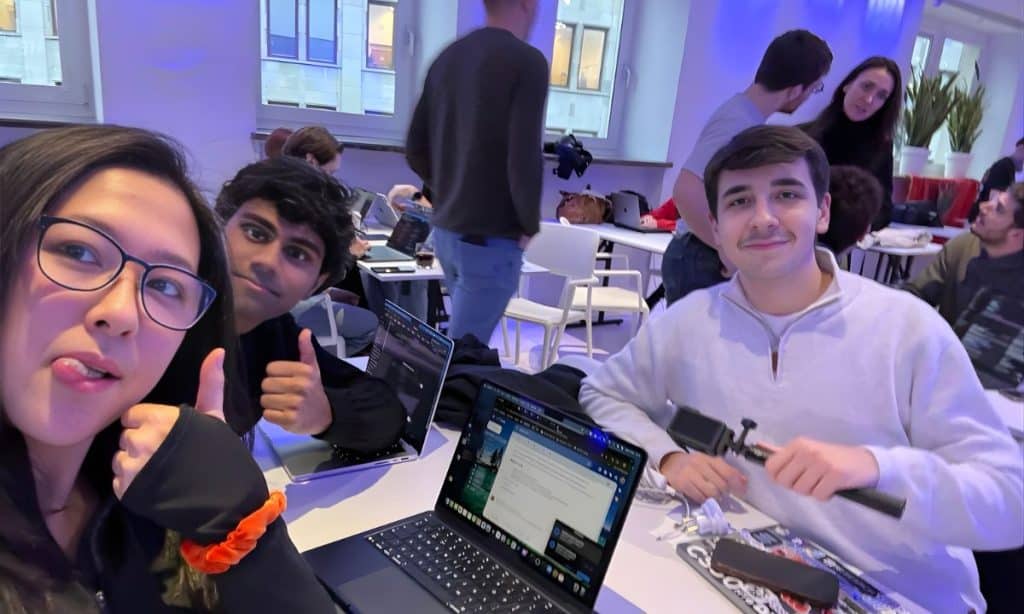
Technically, ElevenLabs handled voice interaction across 17+ languages, while Anthropic generated the dynamic 3D environments players enter. This was layered with Descartes, providing real-time AI-powered video streaming:
We wanted immersion. People are most engaged with what they can relate to… so we chose a first-person video game.
Their full demo presentation is available here, and you can try the game yourself at this link.
The hackathon’s €10.000 grand prize went to qForge, a team that turned voice into a fully interactive storytelling engine. The winners started the event with nothing, according to a group member.
Before the hackathon we basically didn’t have any idea. We spent the first one or two hours trying to figure out something.
What united them was a shared background in gaming. Their brainstorming explored D&D-style narratives and tower defense mechanics until one teammate suggested a direction that immediately clicked – storytelling.
The result: a short, voice-driven narrative and, more importantly, the foundation of a game builder anyone can use.
While some team members refined the story, another focused on the underlying engine, giving the project surprising depth for a one-day build. A major challenge – synchronizing sound effects with voice – was solved by defining clear interfaces, schemas, and types through Cloud Code, which sped up development. You can the demo of their game at this link.
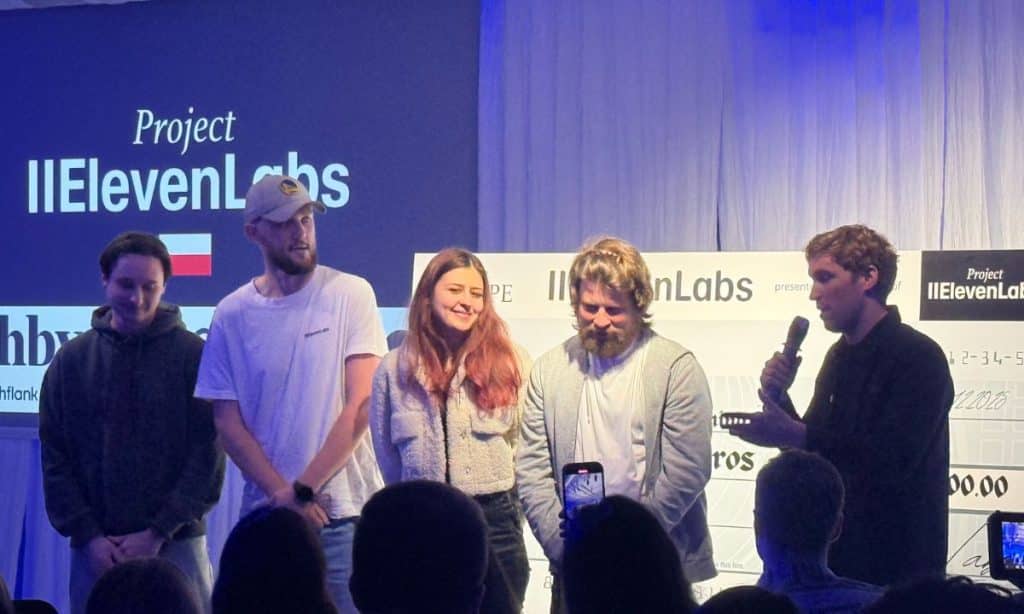
At the end, Mati reminded everyone that innovation rarely comes from waiting for the perfect idea
Remember what Coinbase’s Brian Armstrong said: action produces information. The more teams build, test, discard, and rebuild, the faster they move toward something meaningful.
He highlighted that even the smartest engineers make the right call only part of the time, but those who create relentlessly – trying a hundred ideas instead of ten – dramatically increase their chances of stumbling onto something exceptional.
The insight resonated because the room was full of people who had just lived that philosophy, shipping ambitious prototypes on almost no sleep. It also shaped the judging.
While many teams delivered polished or highly technical projects, the €10,000 winners stood out for embodying Mati’s principle: originality paired with strong execution. Their concept didn’t play it safe, it showed the future of voice-driven experiences.
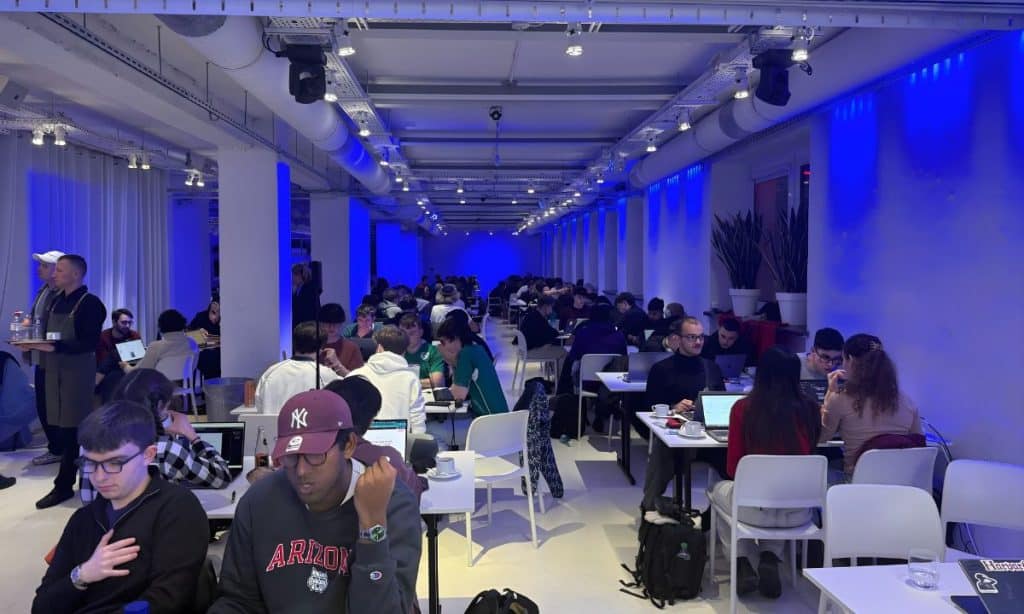
In that sense, the hackathon became a snapshot of what Europe’s builders can achieve when they’re given space to experiment. It showed that voice technology is no longer a niche tool, but a creative surface for teams working across science, gaming, storytelling, and beyond. Builder-first hackathons remove rigid roadmaps and replace them with speed, curiosity, and real experimentation. In a short time, teams ship, test, and learn far more than they would in months of planning.
For companies, this creates an unusually honest feedback loop. Builders push the technology in unexpected directions, surface edge cases, and uncover use cases that rarely appear in product meetings. At the same time, these events strengthen local ecosystems, attract top talent, and send a clear signal that serious innovation can happen here. That combination is precisely why more companies should be organizing events like this across Europe.