Some Engineering Teams Won’t Be Ready for AI Orchestration – and It Will Cost Them

If AI can do the coding and speed isn’t an issue, what do developers actually bring to the table now?
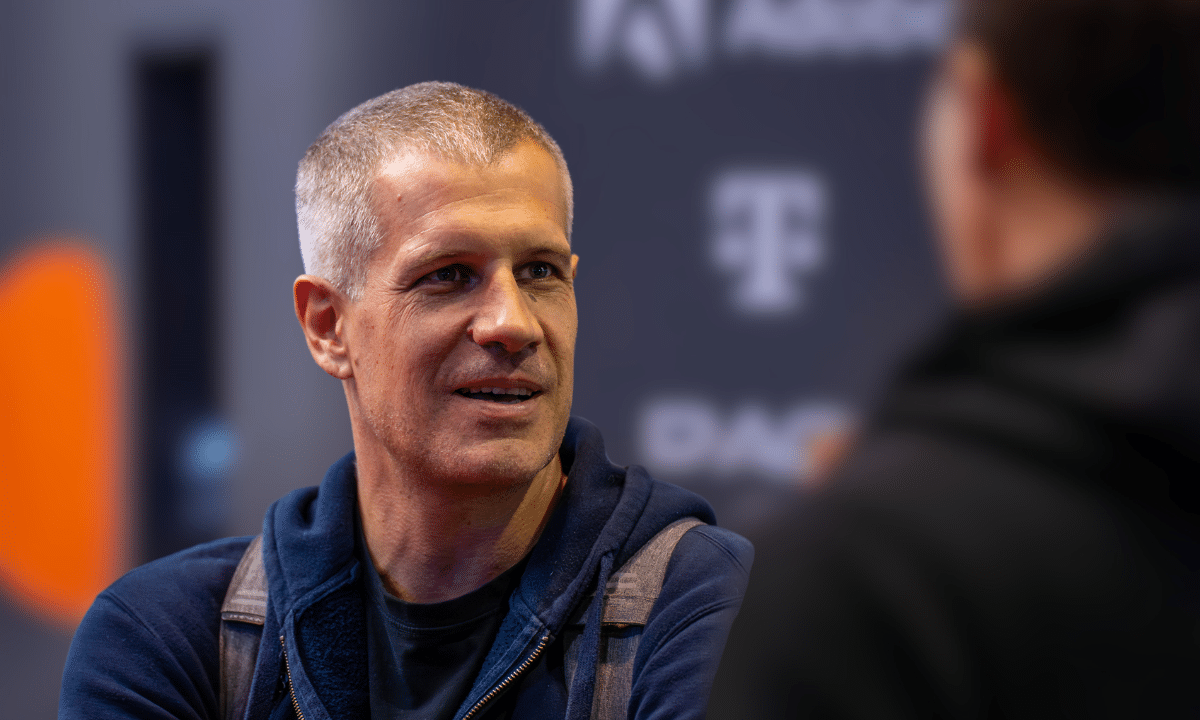
At this year’s Web Summit, one of the main topics was AI agents and the ways they are reshaping the world. Although a Stack Overflow survey showed that developers remain skeptical and agentic AI has not yet fully entered the mainstream, tech companies are firmly betting on this technology and its potential to shape the future across a wide range of fields.
Krešo Žmak, VP of Products at Infobip, held a roundtable on the first day, just before the conference opening, on the topic: From SaaS to Agents: How Personal AI Will Redefine Platforms and User Experience.
To bring you firsthand insights on this topic, we spoke with Krešo. In the interview that follows, you’ll learn everything you need to know about how AI will transform software-as-a-service as we know it and make the user experience truly extraordinary.
Krešo Žmak identified data as the biggest technical barrier in transitioning from a traditional SaaS model to agent-driven platforms.
“The biggest challenge lies in the data,” he said. “It involves combining different sources, managing access, hierarchy, structure, governance, availability, throughput, and so on, because AI is all about data.”
He contrasted deployment speed with real productivity:
You can deploy an agent in minutes by writing a prompt. That’s the initial step. But the real struggle begins when you try to make the agent productive. The first obstacle you face is how to access the data.
Even with modern tools, the issue remains that MCPs simplify access to backend and legacy systems, but the data behind those MCPs or APIs often stays unstructured and undocumented, which creates the biggest challenge.
Krešo emphasized that AI “heavily affects the software industry”. He explained that CPaaS architectures must evolve without requiring a complete redesign.
“In the short to mid term, channels will remain the primary way of communication,” he said, “because business agents will continue to interact with end users”.
He emphasized the need for CPaaS platforms to introduce new interfaces that support agentic capabilities – such as MCP or agent-to-agent connections – to integrate agentic solutions directly into the CPaaS stack. In his view, MCP adoption is already increasing significantly compared with legacy API integrations.
Krešo described the long-term paradigm shift:
In the future, brands and end users will communicate through agents talking with personal agents. Communication will move from machine-to-person to machine-to-machine.
He predicted this revolution will become mainstream by 2028, though rapid AI innovation could accelerate it to next year.
Krešo highlighted MCP and agent-to-agent interfaces as mandatory technologies for modern AI-first products.
CPaaS companies must expose APIs through MCP interfaces and build agents that handle parts of the CPaaS workload, such as onboarding, analytics, or messaging.
He clearly described this transition as the future, where agents will communicate with other CPaaS agents or consume MCP interfaces. This shift is already reshaping the CPaaS landscape.
Furthermore, Krešo argued that the core problem with LLMs doesn’t lie in the technology itself but in how people use it, particularly when it comes to hallucinations.
He explained that if you rely on an LLM directly, it will hallucinate and produce incorrect answers. He advised enterprises to build infrastructure around LLMs:
You need to wrap LLMs with RAG pipelines, enforce guardrails, and process outputs to check for compliance. You must anchor the LLM to the context it serves. An enterprise solution should only respond within the brand’s context.
Finally, he noted that LLMs require integration because an LLM cannot execute actions on its own. To make it useful, you must connect it to the enterprise backend system.
Krešo confirmed the rise of the “chatting with software” paradigm in modern user experience design. He explained that users increasingly activate services, check analytics, or launch campaigns by typing prompts or interacting conversationally with interfaces.
He predicted a hybrid model in which non-deterministic LLM interactions are paired with deterministic UI elements. Inside a portal, users may chat to trigger actions while still receiving structured analytical graphs and predictable outputs.
The future lies in combining classical web interfaces, UIs, and prompting to enhance capabilities.
Krešo explained that AI significantly augments and accelerates business processes and provides much greater capability for processing and structuring data, which drives personalization. He clarified that true personalization is not about surface-level details but about understanding the full context of a user’s interaction, whether they are reaching out about a campaign, an invoice, or something entirely different.
He added that AI enables the summarization of large volumes of data by connecting various touchpoints between a brand and a user and turning them into meaningful insight far beyond classical personalization models.
Personalization means knowing the full context of the user, not just who they are.
Krešo urged developer teams to focus on core engineering knowledge rather than transient AI tools. He emphasized the importance of architectural skills:
Understanding design principles and architecture will become increasingly important. Developers must know how to build applications, how data connects to the user interface, and how the backend processes it.
He concluded that AI tools can accelerate development, but only engineers with strong fundamentals can use them to build robust solutions quickly.