Chris Davidson, Atlassian: “Ask AI to challenge you”
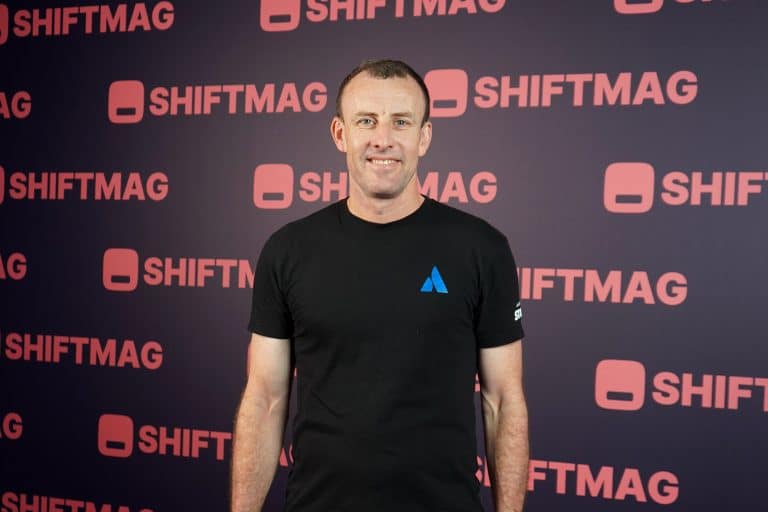
As a Solutions Engineer at Atlassian, Chris Davidson works with clients in an effort to make the most of Atlassian's tools and has first-hand experience of how we adapt to using AI.

For Mackenzie Jackson (Developer and Security Advocate, Aikido Security) modern security is a nonstop game of whack-a-mole, with alerts and vulnerabilities keeping teams busy putting out fires instead of preventing them.
But that chaos of cybersecurity is familiar territory for him: he investigates attacks and helps teams turn those findings into actionable steps.
But strip away the complexity, and his advice on security is surprisingly simple:
One of the biggest areas for smaller teams to focus on is simply stopping the bleeding.
You don’t need a flawless system, you need to regain control, and by implementing proactive measures companies neutralize threats before they ever touch production. It’s not a complete solution, but it’s a necessary foundation.
From the outside, cybersecurity looks like a web of interconnected threats and technically, and it is. But when incidents are investigated, the story tends to collapse into something much more… human:
When you actually investigate a breach, what happened? Well, someone was probably phished, their credentials stolen, and that gave access to a system.
From there, attackers escalate, finding additional credentials, uncovering secrets, moving laterally through systems. Despite all the layers of technical complexity, most breaches still come down to two variables: people and access. This doesn’t make security easy, but it does make it clearer.
One of the oldest problems in cybersecurity is organizational: How do you convince leadership to invest in something that, ideally, prevents things from happening?
Fear is the usual tactic so you talk about reputational damage, financial loss, worst-case scenarios. It works, but only to a point and that is why Jackson suggests a different framing:
Brakes make race cars go faster.
It’s a counterintuitive analogy, but an effective one: without brakes, speed becomes dangerous. With them, drivers can push harder, take sharper turns, and move faster with confidence. Security, in this sense is an enabler:
If we build security now, we can innovate faster… establish your brakes so that you can go faster with confidence.
The alternative, adding security later, under pressure from compliance or customer demands almost always slows teams down.
The arrival of AI introduced a pattern: urgency first, understanding later.
After tools like GPT entered the mainstream, companies rushed to integrate AI into their security products. But much of that early adoption, Jackson suggests, was surface-level. The real value of AI lies elsewhere:
AI is a terrible scanner… but it’s great at understanding context.
Traditional security tools are deterministic and that is why they answer yes-or-no questions. Is there a vulnerability? Does this code contain a known issue? AI, by contrast, is non-deterministic. It doesn’t always give the same answer twice and that makes it unreliable for detection, but powerful for interpretation:
If you give it vulnerabilities and ask how severe this is, how exploitable it is that’s where AI becomes incredibly useful.
In other words, AI doesn’t replace security tools. It complements them, helping teams prioritize what actually matters.
So if AI isn’t fundamentally changing how attacks work, what is it changing? Scale.
AI has given script kiddies superpowers.
This phrase captures the shift precisely: AI doesn’t necessarily make attackers more skilled, it makes attacks easier to execute, faster to launch, and accessible to a much larger pool of people. But the core mechanics of attacks remain the same:
It’s not moving the bar up… it’s changing the scale.
And that, perhaps, is the most important takeaway. Because if the nature of attacks hasn’t fundamentally changed, neither has the foundation of defense. Good security hygiene. Strong access control. Protecting the software development lifecycle, Jackson points out.
The tools may evolve. The threats may accelerate. But the principles still hold