CTOs Face Pressure to Deliver AI Gains, but Productivity Isn’t There Yet
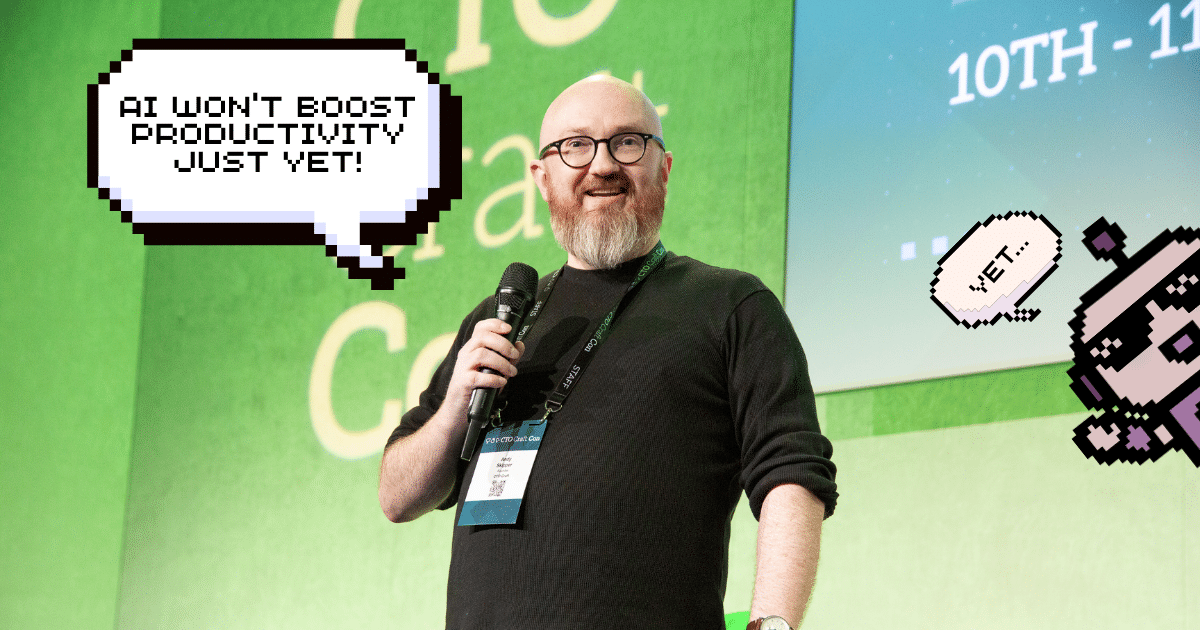
Andy Skipper, founder of CTO Craft, warns that even seasoned CTOs struggle with the pressure to deliver AI-driven productivity while balancing innovation and reality.
According to Andy Skipper, founder of CTO Craft, they’re experiencing fear, uncertainty, and doubt.
And if the technical leaders of companies are feeling that way, what can the rest of us expect? Certainly, we dream of productivity boosts and an AI El Dorado – but that’s not the reality.
That’s why we sat down with Skipper to talk about how CTOs should manage expectations for AI, and how to navigate the hype versus reality.
Stakeholders and investors are watching CTOs closely, and the pressure is rising
Many CTOs, Skipper notes, are navigating intense pressure from non-technical stakeholders and investors alike, especially with the massive resources being invested in AI and LLM technologies.
He’s a bit careful about this:
AI is not going to reduce costs or increase productivity in the way some non-technical people think just yet. It’s getting there, but it’s not there yet.
At the same time, Skipper points out a surprising upside: AI is giving engineering leaders a chance to reconnect with the code and architecture without writing all the code themselves:
One of the things you have to accept as an engineering leader is that you are going to get further away from the code the more senior you become. AI gives people an opportunity to get back to architecture and development work, even if they aren’t coding themselves.
CTO role can be isolating
When Skipper became a CTO for the first time, he quickly realized just how isolating the role could be. There was nowhere for tech leaders to share challenges, get support, or navigate the non-technical side of the job.
That gap inspired him to start CTO Craft, now a community helping senior engineering leaders navigate team dynamics, strategy, and AI.
When I was a CTO for the first time, I didn’t have somebody who I could talk to about the issues I was seeing or compare notes with people who had similar challenges. That’s what CTO Craft is all about – helping people understand where the challenges come from and understand they’re not alone in having those challenges.
As a coach and mentor, Andy works closely with CTOs around the world, helping them deal with issues like burnout, communication with nontechnical stakeholders, and, lately, how to adapt in the AI era.
The most common CTO mistake? Always chasing the newest technologies
Many first-time CTOs struggle with burnout, overextending themselves to shield teams from stress, and balancing hands-on coding with high-level responsibilities. He explains:
A lot of the people that I work with directly are suffering from burnout. First time CTOs commonly miss out self-preservation. And usually that’s a combination of too much expectation of their own energy levels, their own abilities, backlogs…
And after overextending themselves, first-time CTOs often make another common mistake: chasing the newest technologies. While adopting the latest tools and frameworks can seem exciting, Skipper warns that it’s not always the best choice for fast-moving teams trying to scale.
“Using bleeding-edge tech can slow you down, make systems harder to maintain, and even complicate hiring because the talent pool for newer technologies might be limited,” he explains.
As a coach, Skipper says these are just some of the recurring challenges he sees among engineering leaders, alongside a range of other operational and people-related issues.
Engineering skills alone won’t make you a CTO
For aspiring engineering leaders, Skipper highlights that growing into a successful CTO requires more than technical excellence: commercial understanding, communication, coaching, and vision-setting are just as crucial:
The difference between a good engineering manager and a great CTO is understanding how technology drives business success, while still inspiring and guiding your teams.
But technical and business skills are only part of the picture. Motivation and team management are equally critical. Skipper stresses that not everyone is motivated by the same things, and leaders need to understand individual drivers:
Having a vision in the first place is very important. But when it comes to actually bringing individuals along on the journey, they all need to be worked with differently. You can’t just set it and expect everyone to be motivated.
He also warns against a common mistake among CTOs: trying to shield their teams from the challenges of a pivot or rapid change. While the instinct is understandable, it often backfires and drains the leader’s emotional energy. Instead, transparency and realistic communication are key:
Being transparent, being realistic, measuring your words, not being super negative about everything, but still being realistic, I think all these things are really important.
The need for a support network, not another tech stack
Skipper believes resilience and peer support are crucial for engineering leaders navigating the complexity of the CTO role. Sharing experiences and learning from others can help leaders realize they’re not alone when facing difficult decisions.
Looking ahead, however, he admits that the pace of technological change makes it hard to predict what the role will look like in the future.
Five years from now, I honestly have no idea what the role of a CTO will look like. The way we build software is already changing rapidly, especially with AI. But the fundamentals like setting a vision, communicating it clearly, and connecting technology with business outcomes, will always remain essential.
For Skipper, that uncertainty makes peer support crucial: it helps leaders adapt, learn, and navigate a fast-changing profession.
Ultimately, he believes the most important skill for CTOs is the ability to keep learning and tackle challenges without going it alone.
*Infobip, the global communications API leader that launched ShiftMag, was an Event Partner at CTO Craft 2026.
> subscribe shift-mag --latest
Sarcastic headline, but funny enough for engineers to sign up
Get curated content twice a month
Written by people, not robots - at least not yet. May or may not contain traces of sarcasm, but never spam. We value your privacy and if you subscribe, we will use your e-mail address just to send you our marketing newsletter. Check all the details in ShiftMag’s Privacy Notice
NVIDIA’s Igor Dmochowski explained that LLMs are no longer limited just by model size or benchmark scores; the cost of longer reasoning means runtime, context length, memory use, and throughput matter just as much.
Two-thirds of organizations run AI workloads on Kubernetes, but only 7% do it daily. Katie Gamanji says the ecosystem still needs better operational maturity and standards.