I Talk to Production Every Morning. It Talks Back.

A lot of people are leaving software engineering because agent-based workflows killed their joy. I don't have that problem; I never liked the job in the first place.
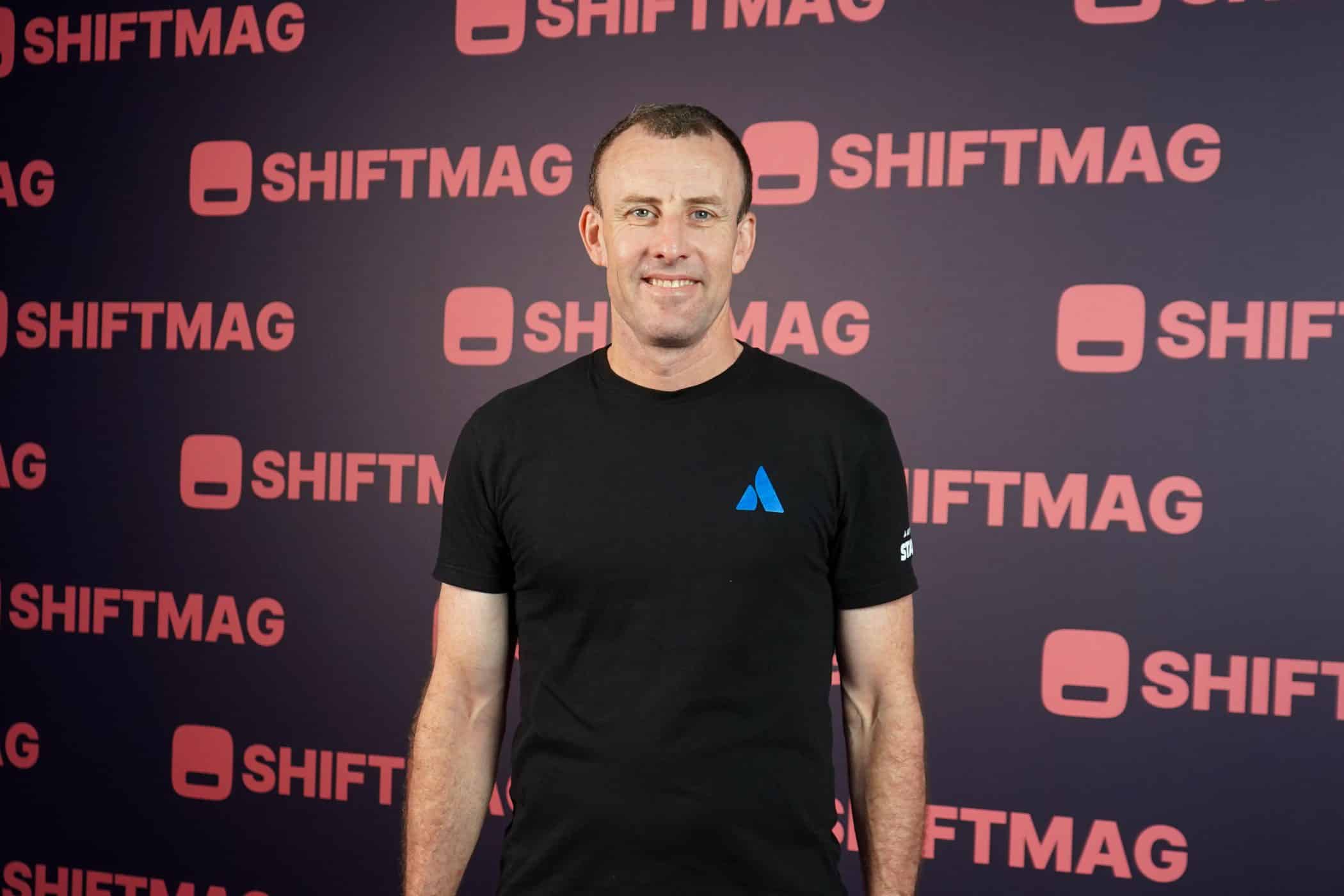
During this year’s Infobip Shift in Zadar, Croatia, Chris spoke to us about AI tools and gave us some inside information on how Atlassian, the creators of Jira and Confluence, work with AI internally. With his role considering lots of work with clients, he also had things to say about how we use (or try to use) AI tools efficiently.
Chris has seen his share of enthusiastic implementations that don’t always work out. Funnily enough, it’s not always the clients and partners that get carried away with AI; sometimes it’s Atlassian. Chris noted that the company is just like many others, trying to figure out the impact of AI as they go on. The one thing to point out is the usage of agents:
I think about agents inside Atlassian, and as a team member adopting them, it’s really interesting to see how quickly they get spun up, but then how quickly they only have only one or two uses.
Then you even get to the point where there’s almost like a clean up process. Many agents, duplicated names and activities, and you have to clean those up. You almost need agents to clean up agents.
Chris told us that, in Atlassian, they’re trying to move fast and react to what customers need and want. This often results in making services and face challenges in duplication.
Despite AI agents and tools’ ability to understand almost everything about software, building things with AI is something most of us do by ourselves. We create tools and use AI to write code we’re working on, but rarely we go and seek how we could work with others. You could argue that using AI has become a bit of a selfish thing; we’re all trying to see what we can do on our own. Chris told us that teams that legitimately change the way they work with AI are usually the ones who use it to collaborate with others.
Maybe they’re opening up more of an interface that’s like self-serve to another part of the organization. You know, you think like QA management and test and development, that interfance, how can we make that better?
It’s not about what we’re coding in our IDE, it’s more about how that work is then moving to the next part of the organization. So I really look for where are connections across that whole development lifecycle, not just the coding bit.
An interesting trend in software development today is adding AI for the sake of AI, thus adding more steps in an otherwise very streamlined process. Chris said that we, as humans, need to be very intentional in finding steps where AI can help. We should not just try and apply AI to every single part of every development lifecycle. Doing that just causes something Chris calls “drag”:
Where it causes drag is when poor quality comes down the pipe. We’ve known for years that it costs a lot more to fix poor quality later in the lifecycle than earlier, and I just think we’re magnifying that challenge with AI because it’s so convincing.
Humans can be a little bit lazy sometimes, said Chris, and added that we might let a lot of things pass through unintentionally. Those things get further down the pipeline and AI then causes a real drag because it’s harder to find and fix, and it takes more effort from everyone.
Engineering leaders today, such as higher-level managers and executives, do not have it easy today. Chris echoed this statement, saying that he “feels for engineering leaders at the moment”, and adding that there’s a whole other layer of dealing with both the technical and human challenges of this AI era.
In terms of where leaders go wrong, Chris used a high reliance on data as an example. In his opinion, with more data of all sorts available today, leaders tend to rotate more towards it than towards qualitative metrics:
Managers can defend and they can articulate well with data. There is a risk that you over-rotate purely to data and not those qualitative metrics. So, engineering managers need to also keep qualitative metrics, developer surveys and developer pulses.
That’s how you stay close to what the feeling is on the ground, from both a performance perspective but also a human perspective.
Using AI tools without being skeptical and critical of them might be the single worst trend not just in software development today, but in almost every industry (and in personal lives of many). Chris noted that it’s really dangerous how convincingly wrong AI tools and agents might be, and without knowing how to properly work with them, you might be a victim of their hallucinations without ever noticing it. Chris explained:
A practice I see many teams do is you use AI to challenge you. You have to have a viewpoint and a hypothesis about what you’re doing and why you’re doing it and how you’re approaching it. Then you use AI to challenge that.
Guaranteed, it will come up with things you didn’t think of. It will come up with elements of code or something in the code that you wouldn’t have seen, and it would not have been detected had it not been for AI.
Wrapping up our chat with Chris, we asked him how would he advise those working with AI every day to make the most of their experience, and collaboration with AI tools:
A practical change might be to take some time out of your week, draw a circle and put all the teams that you work with around that circle, and then start to pull your top three or five teams that are critical to that flow of work, and ask yourself, how could we be using AI better in our relationship with those teams?
If you switch your thought process related to AI from thinking how can the technology make your job easier to how it can make working with others easier, it might just be the thing you need to get the edge. Just don’t go using it without questioning the things it says.