11 Terms You Need to Know Before Incorporating AI
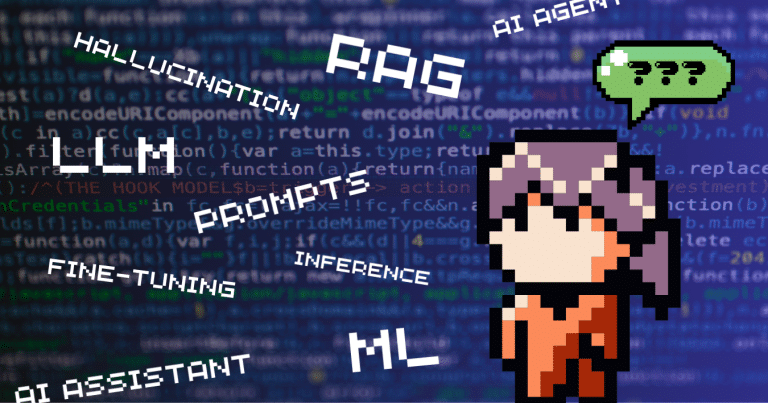
What if I told you that understanding AI is a bit like juggling knowledge about Marvel, DC, Matrix, Harry Potter, Lord of the Rings, and Pokémon franchises? Crazy, right? But hear me out.
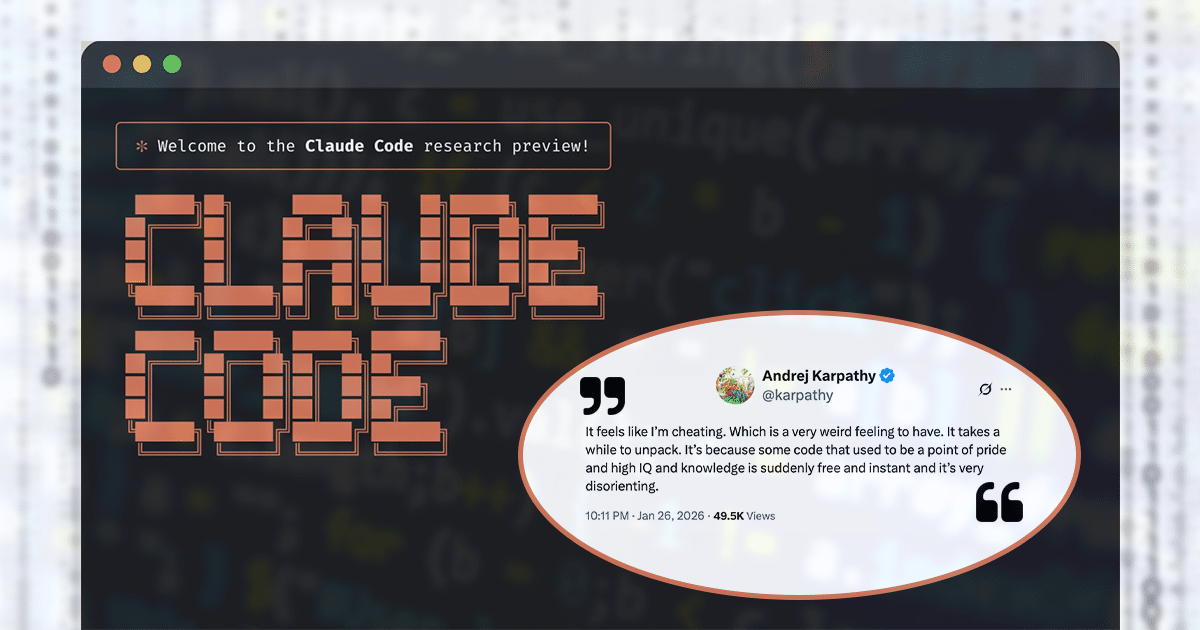
When Andrej Karpathy, former director of AI at Tesla and one of the most influential voices in modern artificial intelligence, casually admitted on X that he now does most of his programming in English rather than code, it struck a nerve.
Not because developers weren’t already sensing this shift, but because he said it, and because he revealed something many wouldn’t openly admit:
It hurts the ego a bit.
This wasn’t just another AI hot take. A top expert openly admitted that software development has changed in a fundamental way. Karpathy was clear:
This is easily the biggest change to my basic coding workflow in 2 decades of programming and it happened over the course of the few weeks.
Karpathy explains how, over the course of just a few weeks coding in Claude, his workflow flipped almost entirely. What was once mostly handwritten code is now largely driven by LLMs, guided through natural language.
I really am mostly programming in English now, a bit sheepishly telling the LLM what code to write… in words. It hurts the ego a bit, but the power to operate over software in large “code actions” is just too net useful.
That sentence carries more weight than it first appears. It openly acknowledges the productivity gains while naming the quiet discomfort many developers feel but rarely articulate. Even for Karpathy, something is unsettling about no longer being the one writing the code line by line.
This shift isn’t about convenience or a slightly better tool. Karpathy describes it as a phase change, not an incremental improvement.
The role of software engineers moves away from writing individual lines of code and toward orchestrating large code actions. LLMs don’t behave like perfect assistants; they act more like eager but sloppy junior developers: fast, capable, and occasionally careless. They don’t ask clarifying questions, they guess. And sometimes they guess wrong.
The result is faster output, but also a different kind of responsibility. Less mechanical, more abstract. Less about syntax, more about judgment.
The reaction to Karpathy’s post helps explain why it resonated so widely. Some developers see this evolution as liberating, with fewer repetitive tasks, more leverage, and more time spent on meaningful problem-solving. Others see something more troubling: a slow erosion of the craft that shaped their professional identity.
A familiar split emerges: on one side are builders who embrace orchestration, prompting, and verification, on the other are developers who feel that if they’re not writing code, they’re not really programming anymore.
That tension is emotional, not technical. Programming has never been just a job. For many, it’s a source of pride. When that pride is challenged, even by efficiency, it stings.
What makes this moment particularly interesting is that Karpathy hasn’t been blindly optimistic about AI agents. In the past, he’s openly questioned their maturity, arguing that today’s agents are unreliable and far from fully autonomous.
This contrast is important. He’s saying these tools are too useful to ignore, but he’s also clear they’re still messy, fragile, and imperfect. This isn’t hype, it’s real challenges. And challenges are what spark meaningful discussion.
This conversation goes beyond the usual AI discourse cycle. If top engineers are moving from writing code to guiding systems, if success is measured by results rather than lines of code, and if pride, not skill, is the main barrier, then something bigger is happening.
We’re not just changing tools, we’re renegotiating what it means to be a developer.
The real question isn’t if this trend will keep going. It’s this: If programming becomes mostly about language, judgment, and style, what happens to being defined by code?
Karpathy’s post doesn’t give answers but shows the tension. Is moving away from manual coding progress or loss? Empowerment or subtle deskilling?
And if top engineers admit it “hurts the ego,” what does that mean for the future of the profession?
By the end of 2025, LLM coding agents reached a level of coherence that triggered a shift in software engineering. Intelligence is now outpacing tools, workflows, and organizational structures. The industry is just starting to catch up, and 2026 is shaping up to be a fast-moving year as development learns to harness this new power.