AI Won’t Replace Security Tools – It’s Helping Them Prioritize Biggest Threats
Mackenzie Jackson, security researcher and advocate, told me that AI can’t catch the bugs, but it knows which ones actually matter and provides the context teams need.
For years, AI could think, it could talk, it could reason through complex problems, and generate ideas that even surprised its creators. But there was always a wall: AI could tell you what to do, but it couldn’t actually do anything without additional integrations.
That wall is coming down.
AI is learning to act. And we have MCP servers to thank for that.
If you’ve spent any time with ChatGPT, Claude, or any other AI assistant, you’ve hit this wall yourself.
You ask it to check your calendar and find a free slot for a meeting, but it can’t do it. You want it to send a quick message to your team: it’ll happily write the message, but you’re on your own for the sending part. You ask it to look something up in your company’s knowledge base, it apologises and explains it doesn’t have access.
It’s like having a brilliant advisor who’s never allowed to leave their chair. Or a new colleague who can give you perfect instructions for any task but is not allowed to touch a keyboard.
The AI can think circles around most problems. It can draft, plan, summarise, and strategise with impressive skill. But when it comes to actually doing something in the real world? Helpless.
This gap between intelligence and action has been one of AI’s most glaring limitations. And frankly, one of its most frustrating.
Remember when every device in your living room came with its own remote control? One for the TV, another for the sound system, a third for the streaming box, maybe a fourth for who-knows-what. Your coffee table looked like a remote control parking lot.
Then came the universal remote – one device that could talk to everything.
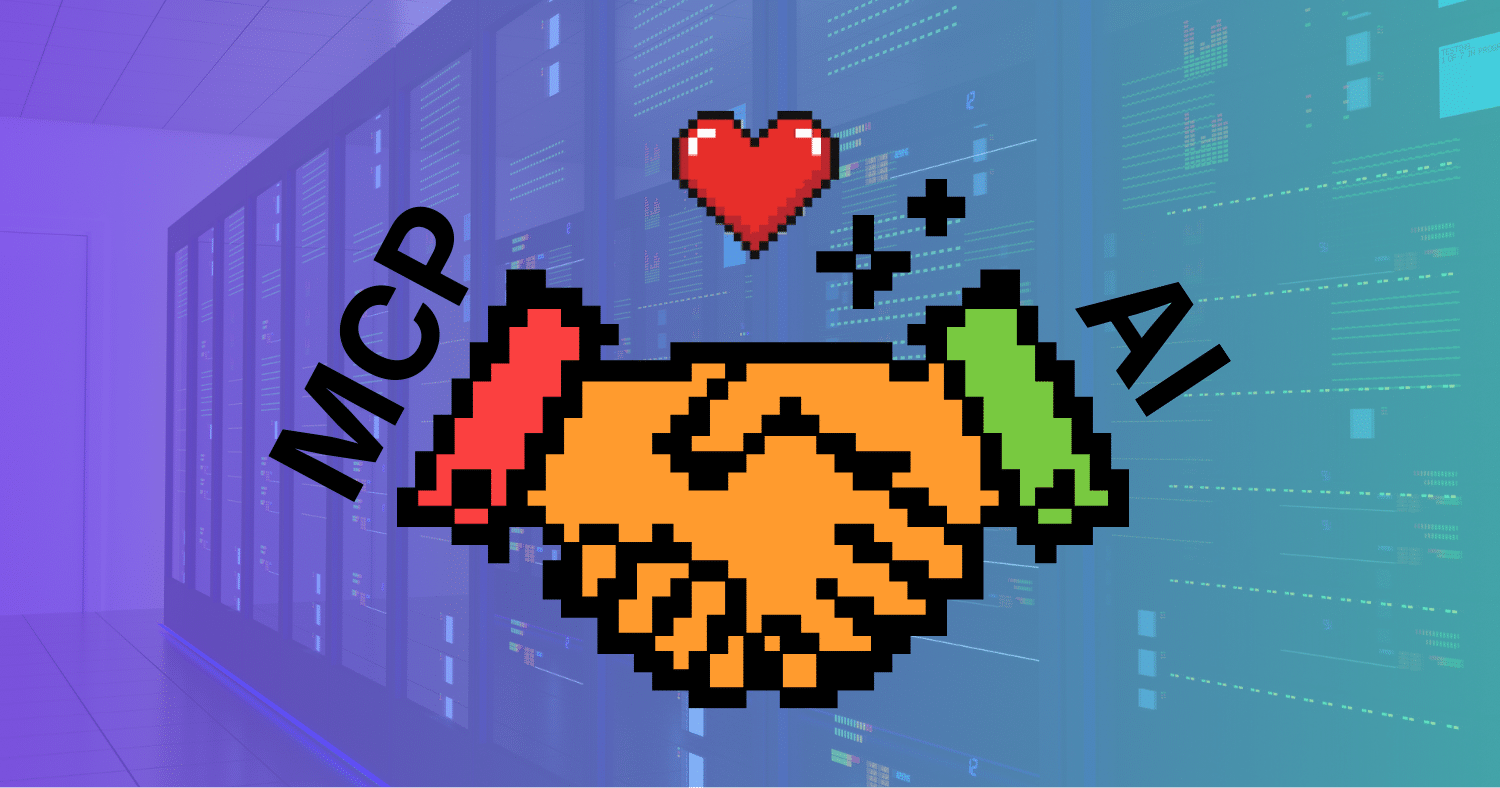
That’s essentially what MCP, the Model Context Protocol, does for AI.
MCP is an open standard, introduced by Anthropic, that creates one consistent way for AI to connect to external tools and services. Instead of every AI platform building custom integrations with every possible tool (a nightmare of complexity), MCP provides a common language. Build an MCP connector once, and any AI that speaks MCP (aka supports MCP functionality) can use it.
Anthropic often describes MCP as the “USB-C cable” for AI: a single, universal connector that works across countless devices and platforms. Just like USB-C lets you charge your phone, laptop and headphones with one cable, MCP gives AI a consistent way to interact with a variety of tools and services, streamlining the process and cutting out needless complexity.
The AI doesn’t need to know the specifics of how your calendar works, or how your messaging platform sends notifications. It just needs to speak MCP, and the MCP connector handles the rest.
So what does this actually look like in practice?
Imagine asking your AI assistant to “remind the team about tomorrow’s deadline on Slack.” Today, the AI would draft a message and leave it to you to copy, paste, and send. With MCP, the AI can connect directly to Slack and post the message itself. The task goes from partially complete to actually done.
Here’s another example: suppose you want your AI to “scan all unread invoices in my email and file them into my accounting software.” Previously, the AI could only help you write a filtering rule or suggest a workflow, leaving you with the tedious manual labour. With MCP, the AI can access your email, identify the relevant invoices, and transfer the data directly into your accounting app. No manual steps required from you. And just like that, time-consuming admin chore becomes a background task, handled smoothly by your AI assistant.
The shift is subtle but significant. AI moves from being a thinking tool that suggests solutions to being a doing tool that awaits approval.
Now, think about how much of your digital life is communication: messages, emails, notifications, alerts… We spend enormous amount of time not just crafting communication, but also managing the logistics of it, like choosing the right channel, checking if someone’s message was delivered, following up when it wasn’t.
Now imagine an AI that doesn’t just draft your messages but can actually send them across WhatsApp, SMS, Viber, email; wherever your recipient prefers. Not only that, it can access your customer engagement platform and manage your communication for you, follow up on your campaigns, send alerts, and notify you about your product shortages.
MCPs are often built on top of the existing APIs. A company with a robust messaging infrastructure, for example, can wrap its API in an MCP layer, giving AI agents a standardised and secure way to send communications without needing custom integrations for every AI platform.
That’s exactly what Infobip’s MCP servers do. They connect AI to real messaging infrastructure, turning “I’ll write that for you” into “Done, sent. Here’s the report and next steps.”
You might be wondering: why should I care about this now? Isn’t this just developer stuff?
Here’s why it matters: the MCP ecosystem is growing fast. Anthropic has released connectors for Google Drive, Slack, and other everyday tools. Companies across industries are building their own. What started as a technical specification is rapidly becoming the foundation for a new generation of AI tools.
In practical terms, this means the AI assistants you use are about to get significantly more capable. The gap between “AI that advises” and “AI that assists” is closing.
We’re moving from AI as a conversation partner to AI as a genuine collaborator; one that can not only think through problems with you, but can take action on your behalf.
For years, AI has been a bit like a co-pilot who can read every map ever made but isn’t allowed to touch the steering wheel. Brilliant, yes. Occasionally life-changing, sure. But ultimately limited.
MCP changes that equation. It’s the infrastructure layer that lets AI finally reach out and interact with the digital world, sending messages, accessing tools, completing tasks.
The wall between thinking and doing? It’s coming down.
And that’s when things get really interesting.
Curious to explore further? Infobip’s MCP is available on GitHub, whether you’re a developer looking to build, or just someone who wants to see what’s under the hood.