How We Catch Messaging Campaign Drift Before It Spreads
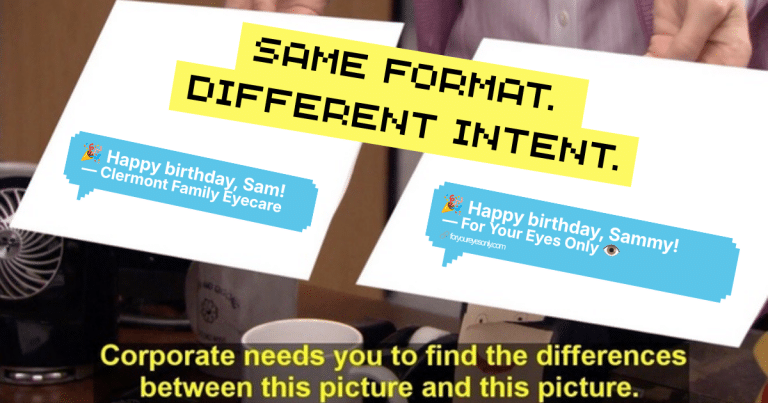
Over time, the content a messaging campaign sends can shift away from what was originally approved. We call this campaign drift, and in business messaging, it's a real and recurring problem.
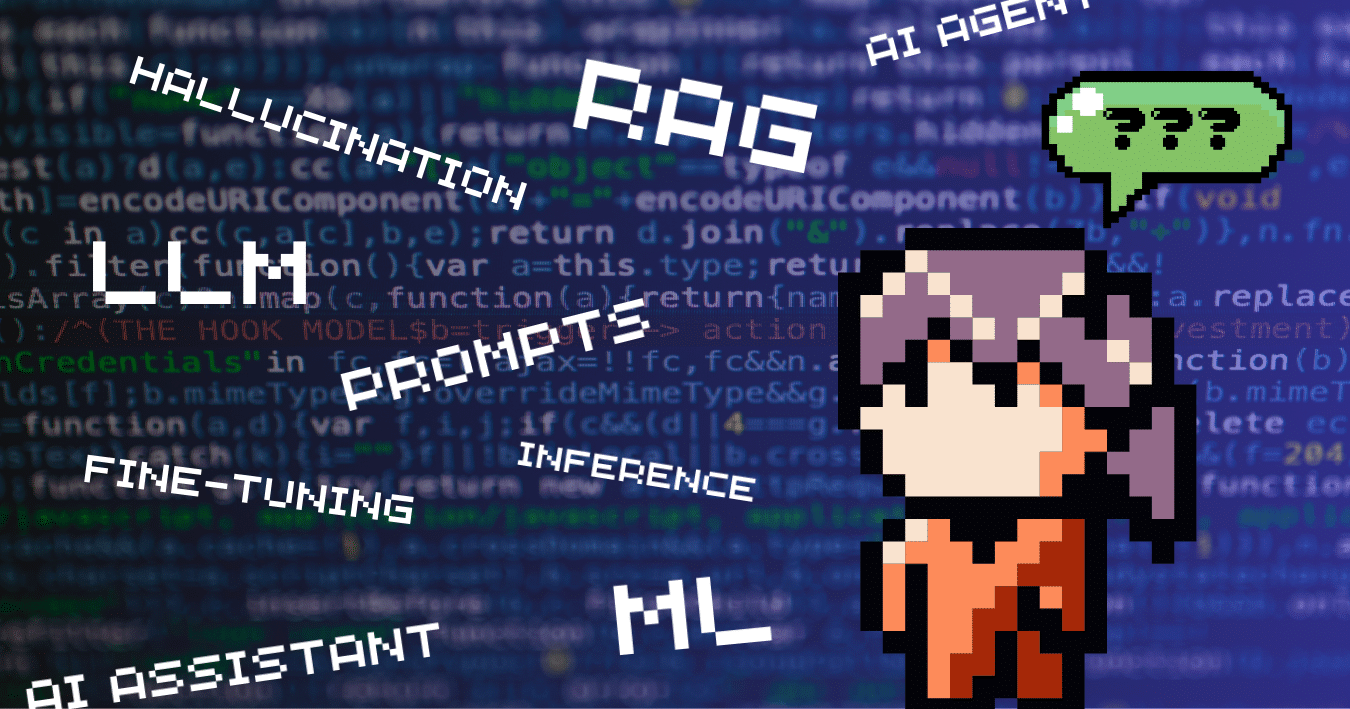
Remember the first time AI showed up at your company? That meeting where everyone (tech experts, managers…) threw around terms like LLMs, RAG and AI agents like they were yesterday’s news, and you sat there thinking:
Wait… what does any of that even mean?
If you’re not totally fluent in AI lingo, it usually means you end up using tools without really understanding how they work.
My colleague already wrote a full AI glossary, but I just want to cover the basics – and, of course, throw in some pop culture along the way.
AI is any system that does “smart” work. That can be rule-based (“if X then Y”), statistical, or learned – like recognizing patterns, making decisions, understanding language, or spotting anomalies.
Pop Culture Reference: Imagine JARVIS from Iron Man – not the suit, but the agent behind it: interpreting Tony’s questions, pulling relevant info fast, and suggesting next steps.
Business Reference: AI can classify customer requests, predict leads most likely to convert, detect fraud, recommend next steps, or draft content – often at a speed and scale no human team could match.
Key Insight: AI isn’t magic. It’s a pattern engine that works best when the goal is clear, the data is relevant, and humans remain in the loop for judgment, ethics, and edge cases.
ML is a branch of AI where systems don’t follow long lists of hand-written rules. Instead, they learn patterns from examples and make predictions or decisions based on them.
Pop Culture Reference: Think Doctor Strange practicing spells. At first, he barely makes a spark. After thousands of repetitions, his hands “learn” the exact motion and timing to open a portal.
Business Reference: ML powers churn prediction, lead scoring, fraud detection, demand forecasting, and recommendation engines.
Tradeoff: ML can outperform rule-based logic at scale, but it’s only as good as the data it learns from. Biased, messy, or outdated data leads to biased predictions – the equivalent of “casting yesterday’s spell.”
LLMs are ML models specialized in language. LLMs are trained to predict the next token in context, which lets them generate text, summaries, answers, and other language outputs.
Unlike a normal database, an LLM doesn’t “look up” facts by default, it generates plausible responses, which can sound confident even when wrong.
Pop Culture Reference: Think of the Sorting Hat in Harry Potter. You give it cues (values, experiences, preferences), and it produces a fluent, confident answer: “Gryffindor!” or “Slytherin!”
Business Reference: LLMs excel wherever language is work: customer support, sales follow-ups, knowledge Q&A, meeting notes, content drafts, and cleaning up messy inputs. Best results come with clear context, constraints, and human review for high-stakes decisions.
A prompt is your “three wishes” moment with a genie (think Aladdin). Vague wishes lead to weird outcomes. The clearer and more specific your prompt, the closer the AI gets to what you meant.
Training data is everything Neo downloads in The Matrix (“I know kung fu”). It’s the massive pile of examples AI absorbs to recognize patterns and perform skills later, except here it’s language, facts, and human responses.
Inference is when AI actually produces an answer on demand. Training is studying and practice; inference is taking the test or doing the real work. The model calculates the most likely next words or best output based on what it learned.
Think of JARVIS answering Tony’s question in real time. All that training compressed into a single, instant response. That’s inference: not learning, just delivering.
Hallucination occurs when AI gives a confident, polished answer that is wrong or partly invented. It’s like that friend who exaggerates every story and even a trip to the bakery becomes an epic saga.
Fine-tuning is giving a general AI extra, targeted training so it learns your business context – your terminology, tone, and common tasks. It won’t guarantee perfect rule-following on complex decisions, but it gets the model significantly closer to how your team thinks and communicates.
Like training a Pokémon: a newly caught random Pokémon can battle, but one with complementary Nature, specific move set, and EV trained for your team’s strategy – performs much more reliably.
RAG lets AI answer using your trusted information (FAQs, policies, docs, CRM notes) instead of guessing.
Think Hermione Granger. When a question arises, she doesn’t just “vibe” an answer, she finds the right book, locates the passage, and explains clearly. That’s RAG: “look it up first, answer second.”
An AI workflow is a system where LLMs and tools are orchestrated through predefined steps. The AI handles language – generating, summarizing, classifying – but the logic of what happens next is written by humans in advance.
Pop Culture Reference: Think of the Fellowship of the Ring. Everyone has a role, a route, and a plan: cross the mountains, destroy the ring, protect the hobbits. Each member executes their part. When the plan works, it works perfectly. But if the mountain is blocked by a snowstorm (Caradhras), the Fellowship has no flexibility – they need to find a different path entirely.
Business Reference: Workflows shine for predictable, repeatable tasks – summarizing support tickets into a CRM, routing inbound emails to the right team, generating weekly reports from your data. They are fast, consistent, and easy to audit. Use them when the goal and the steps are clear.
An AI agent is a system where the LLM itself decides what to do next – it dynamically directs its own process, selects tools, adapts when something fails, and keeps going until the goal is reached. Unlike a workflow, the path isn’t predefined: the model figures out the steps. Think of it this way: an agent is an LLM using tools in a loop, autonomously, until the job is done.
Pop Culture Reference: Think Harry, Hermione, and Ron hunting Horcruxes in Deathly Hallows. There’s no fixed plan – they have a mission, gather information, change tactics when something fails (tent camping, anyone?), and improvise through obstacles no one predicted. That’s an agent: goal-driven, tool-using, self-directing.
Business Reference: Give an agent an objective (e.g., build a competitor feature table), and it decides the steps – what to search, what to read, how to structure the output – iterates when something is incomplete, and delivers results. Best for complex, open-ended tasks where the steps can’t be fully predicted in advance.
You now have a mental model for AI jargon. You don’t need to memorize 11 terms; you need to understand what you’re buying, building, or using.
AI won’t replace judgment, but it will punish vague instructions, messy data, and unclear ownership. Cheat code? Use workflows when the path is clear and you need consistency at scale. Send agents when the mission is complex and the path can’t be fully mapped in advance. And always demand receipts when the answer matters.